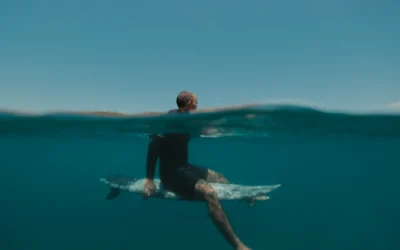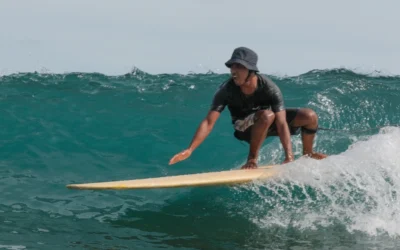
It’s one of the most common questions we hear in the lineup or after a long surf session or surf trip: how do I surf better?
Usually it comes from someone who’s catching a few waves, feeling the buzz… but watching other surfers carve up the wave face with confidence. FOMO, but surf style.
Here’s the honest answer: performance surfing isn’t for everyone. And that’s completely fine.
In fact, trying to rush into performance surfing too early can quietly hold you back later.
At Xanadu, we work with beginner surfers, intermediate surfers and more experienced surfers every single day. And what we see again and again is this.
The surfers who improve the most aren’t the ones rushing to surf faster or ride the smallest board.
They’re the ones committing to slow progression, solid fundamentals and (most importantly) catching lots of waves.
Let’s break it down.
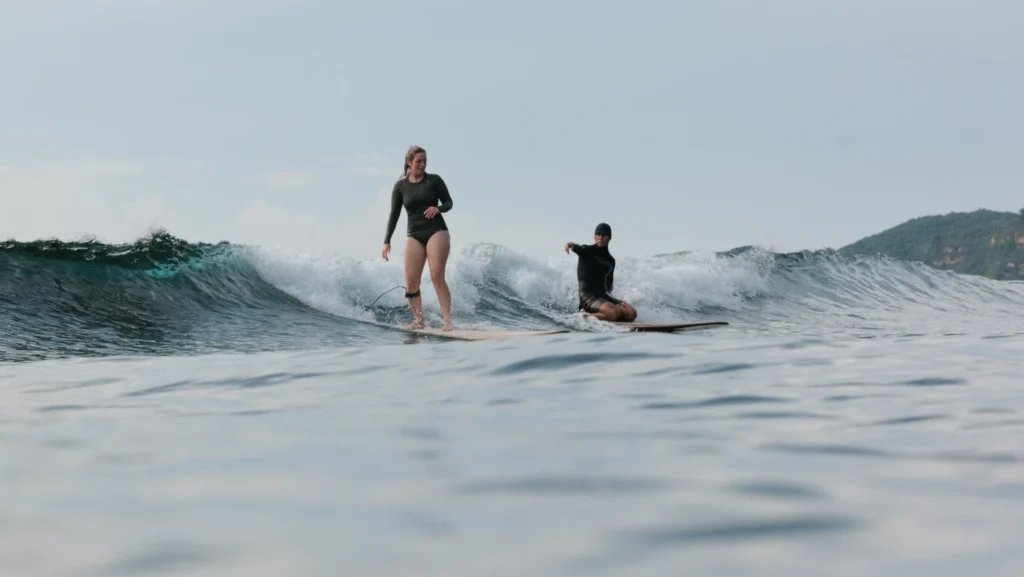
Performance surfing and why it’s tempting
Performance surfing looks amazing. Cool. Dare we say… sexy?
Tight turns. Graceful cross-stepping. Powerful bottom turns. Calculated pop-ups. Explosive manoeuvres on breaking waves. It’s what advanced shortboarders and longboarders do when the surf report shows clean conditions at reef breaks or point breaks and everyone is frothing to get out there.
It’s also why many people learning how to surf try to copy what they see too early.
Big mistake.
That’s like watching a chef prepare a gourmet meal and thinking you can replicate it after observing them only once.
Common signs of rushing performance:
- Switching off a big board before wave count is consistent
- Riding a beginner surfboard that’s too small
- Forcing turns on waves that are too soft
- Being a wave hog and trying to catch ALL the waves
- Spending more time duck diving oncoming waves than surfing them
The result?
Fewer waves, more frustration. And a surf session that feels like hard work instead of fun surfing. Even worse… this approach can bake in habits that are difficult to fix later, no matter how many surfing tips you receive. A few examples of bad surf habits include:
- A stiff upper body
- Poor back foot awareness
- Knees bent at the wrong moment
- Jerky movements instead of one smooth motion
Many surfers don’t realise that rushing performance can cripple style later on, whether you’re on a shortboard or longboard.
Slow progression and why it works
Slow progression isn’t about remaining a beginning surfer forever. It’s about respecting the learning process. Not rushing. Trusting that you’ll develop your own style with time.
This approach focuses on:
- Catching as many waves as possible (while still respecting surf etiquette)
- Surfing beginner waves and soft waves until you’re ready to step up
- Trying to repeat the same manoeuvres over and over
- Developing paddle power and timing so you can surf longer
At Xanadu, our surf lessons are designed around this idea. We choose surf spots and beginner spots that allow you to start catching waves early, often before they fully break.
This means more green wave rides, better balance and real confidence. You know… the type of confidence that allows you to travel the world with your newfound surf skills.
Slow progression builds:
- Wave knowledge: understanding how waves break and where breaking waves peel
- Paddling efficiency: learning to paddle parallel with control
- Positioning: knowing where to sit in the lineup
- Flow: moving smoothly rather than forcing speed
Surfers who take this path often catch more waves in one surf session than performance-focused learners do in a week.
Style comes from fundamentals, not tricks
Style isn’t something you can copy. It develops naturally when fundamentals are solid. Good style comes from:
- A relaxed posture
- Correct pop-up mechanics
- Balanced weight between the front foot and the back foot
- Calm reactions when you’re on the wave
- A confidence in your ability to surf your way
If you rush past these basics, your body finds shortcuts. Those shortcuts turn into habits. And later, when you want to surf faster or take on more advanced surfers, those habits limit progress.
This is why at Xanadu, we often keep guests on larger boards for as long as we deem necessary. It’s almost like a formula. More waves equal more repetition. More repetition equals better surfing.
Not sure what your surf level is? We can even help you with that.
Comparing the two learning paths
Performance-first learning:
- Lower wave count
- Faster frustration
- Style often looks forced
- Progress stalls easily
- Surf sessions feel intense, not playful
Slow progression learning:
- More waves and more fun
- Stronger paddle power
- Better surf etiquette awareness
- Clean pop-up in one smooth motion
- Confidence across different surf spots
One looks impressive early. The other lasts a lifetime.
Why surf retreats and guidance matter
Trying to figure everything out alone often slows progress.
A good surf instructor, whether it’s at a surf camp or surf retreat, helps with:
- Choosing the right beginner surfboard or own surfboard
- Understanding the surf forecast and weather forecast
- Reading incoming waves and wave face shape
- Learning when to turtle roll vs duck dive
- Building safe habits around local surfers and surf etiquette
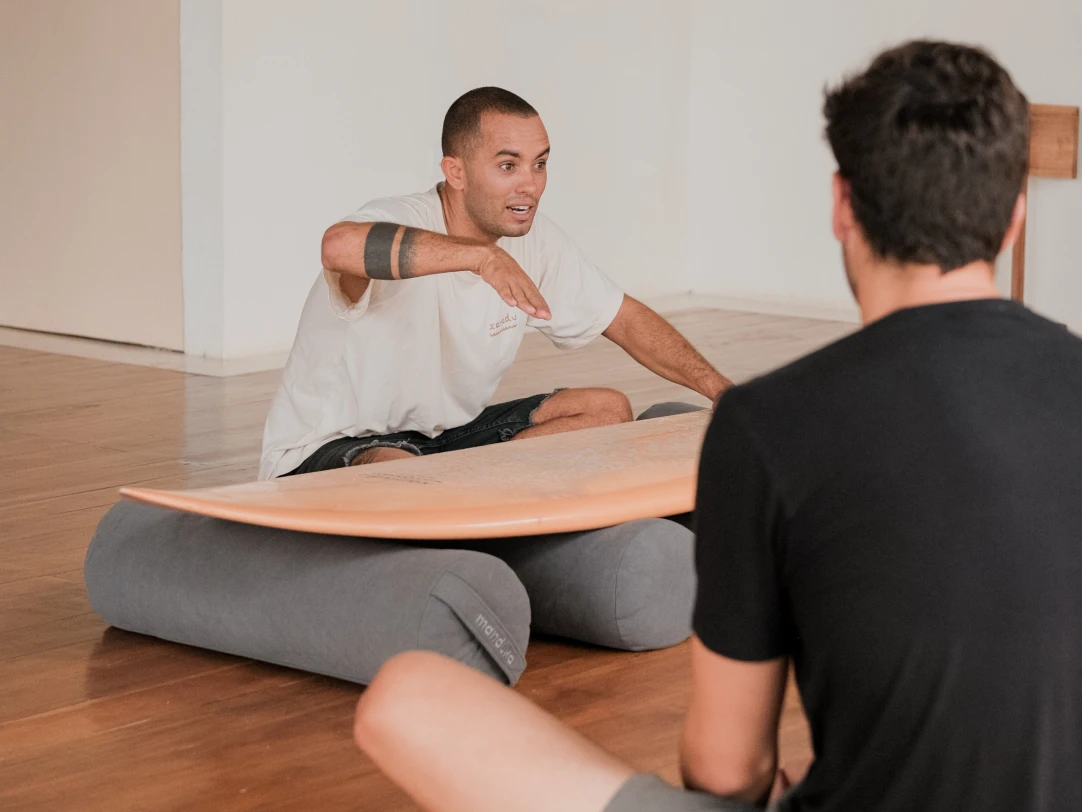
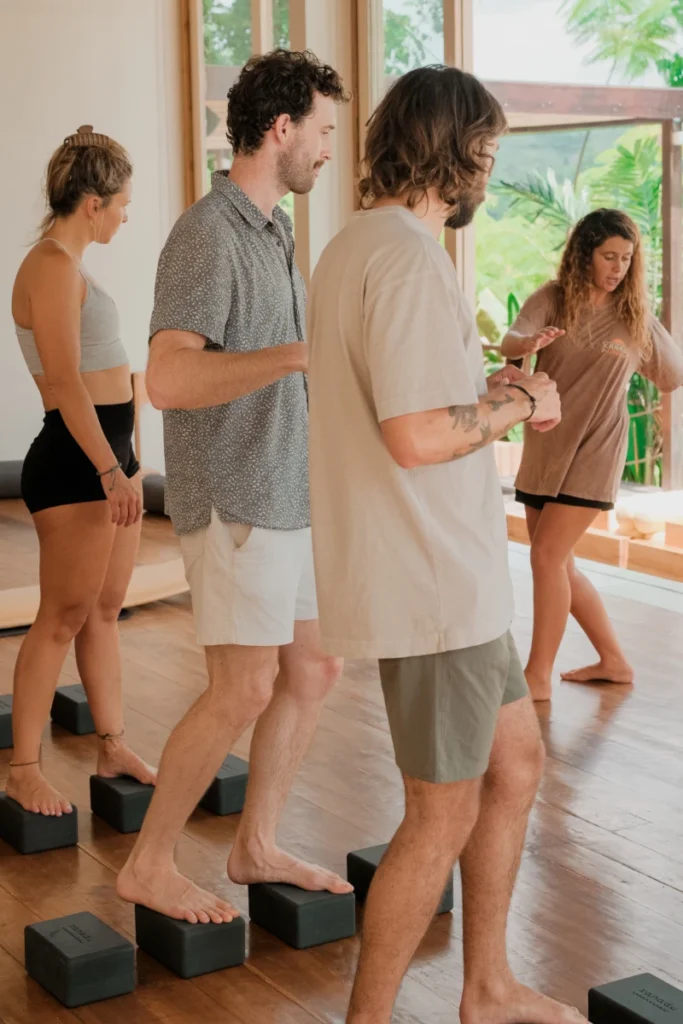
At Xanadu Lombok, we combine daily surf sessions, video analysis, beach practice, surf theory and proper equipment to support steady progression.
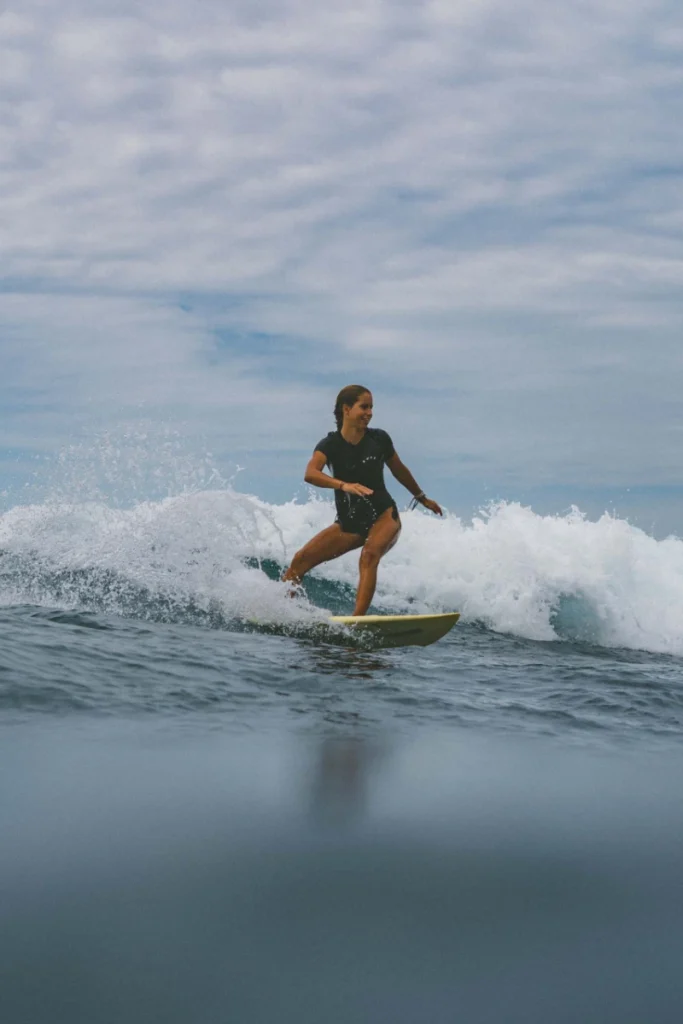
The goal isn’t just surfing. It’s surfing well. With confidence and control. With a style that’s uniquely your own. All so you can enjoy small waves, big waves and everything in between.
Learn more about how our surf retreats run.
FAQ: Common questions we hear at Xanadu
Q. How do I catch more waves as a beginner surfer?
Improve paddle power, position yourself better in the lineup and (most importantly) use a board that helps you start catching waves earlier.
Q. Should I downsize my board to surf better?
Only when you’re consistently catching more waves than you miss. Board size doesn’t equal ability. You need to practice paddling on longer boards or even foam boards before you make the jump to a shorter board.
Q. Are point breaks better for learning to surf?
Point breaks help with consistency, no doubt, but beginner waves at beach breaks can be just as effective when chosen correctly. You needn’t worry about this when you’re with Xanadu. We’ll make sure to take you to the best spots for your skill level.
Q. How many waves should I aim for per surf session?
As many waves as possible while respecting surf etiquette. Wave count matters more than wave size. But taking the same wave as another person or dropping in on someone to get that ride isn’t cool.
Q. Can slow progression still lead to advanced surfing?
Absolutely. Most advanced surfers built their skills slowly, even if it doesn’t look that way now.
Surf better by slowing down
If you’re asking, “How do I surf better?”, the answer usually isn’t to rush, force or compete.
It’s about:
- Catching more waves
- Practising popping up again and again
- Staying relaxed through the learning process
- Letting confidence build naturally
Slow progression isn’t anti-performance. It’s how performance is actually built. And when you’re ready to push further (whether that’s reefbreaks, bigger waves or more advanced surfing), you’ll arrive with style, control and maybe even a cheeky little smile.
That’s how we do it at Xanadu.