Surfing isn’t just about speed, graceful logging or blasting your Instagram feed with photos of yourself doing either. At its core, surfing is about presence.
The kind of presence you can’t fake. The kind you earn by sitting quietly in the lineup, watching the horizon, enjoying the moment.
And you know what? Icons of the surfing world get it too.
From Pipeline pioneers to world champions, the most respected surfers in history all circle back to the same thing: being mindful when you enter the water (and keeping that presence when you exit it).
Let’s count it down.
7. Laird Hamilton proves fear becomes focus
Big-wave icon Laird Hamilton isn’t just charging mountains of water that make us mere mortals cringe with fear. He’s mastering his nervous system too.
Hamilton openly practices breathwork and meditation. When you’re staring down an 80-foot wall of moving ocean, panic isn’t optional. It’s automatic.
Mindfulness might not instinctively override these base emotions, but it definitely helps us deal with moments of anxiety in the water. And the father of tow-in surfing proves it.
Key lesson:
Calm isn’t passive. It’s trained. In surfing and in life, fear shrinks when attention sharpens.
6. Kelly Slater competes like a monk
11-time world champion Kelly Slater has long integrated yoga, breathwork and meditation into his performance routine.
But here’s the key: it’s not about flexibility. It’s about mental clarity.
When you’re in a 30-minute heat with priority ticking down and a world title on the line, distraction can cost you dearly. Slater speaks often about awareness and about staying inside the moment instead of projecting outcomes.
He’s also a huge advocate for ice baths, saunas and other forms of wellness.
Key lesson:
The wave in front of you is the only one that matters. Mindfulness turns pressure into precision.
5. Gerry Lopez blends surfing and yoga philosophy
Pipeline master Gerry Lopez might be the clearest bridge between surfing and mindfulness.
Lopez has practised yoga and meditation for decades. He famously says that once you paddle for a wave, you must enter a “totally focused, meditative state” or you’re done.
To him, surfing isn’t separate from mindfulness. It is mindfulness. And we think that’s pretty cool.
Key lesson:
Total presence equals total flow.
4. Stephanie Gilmore rides with awareness
Eight-time world champion Stephanie Gilmore talks about rhythm, grace and connection to the ocean.
Watch her surf and you’ll see. It’s not forced. It’s felt. Her reputation as one of the smoothest surfers to ever wax a board is evidence of this approach.
Gilmore has spoken about mindfulness and staying grounded between heats. That emotional steadiness translates directly into fluid style.
Of course, we’re not saying mindfulness will make you surf like Steph. But it’ll definitely be a step in the right direction.
Key lesson:
Relaxed awareness creates beautiful surfing. You can’t rush grace, which we discuss in our latest article on fast versus sustainable progression.
3. Soul surfers chase feeling over trophies
The “soul surfer” movement of the 60s and 70s wasn’t about points or podiums. It was about presence.
Older surfers like Nat Young (in his early career) and younger surfers like Dave Rastovich, among others, stepped away from pure competition to reconnect with feeling.
Soul surfing is mindfulness without the label. You wait. You watch. You accept the ocean as it is… even if it can be frustrating at times.
H4: Key lesson:
Not every wave needs to be optimised. Some just need to be enjoyed for enjoyment’s sake.
2. The lineup forces you into the present
No Instagram. No multitasking. No notifications from your boss asking why your last Zoom call had palm trees and an infinity pool in the background.
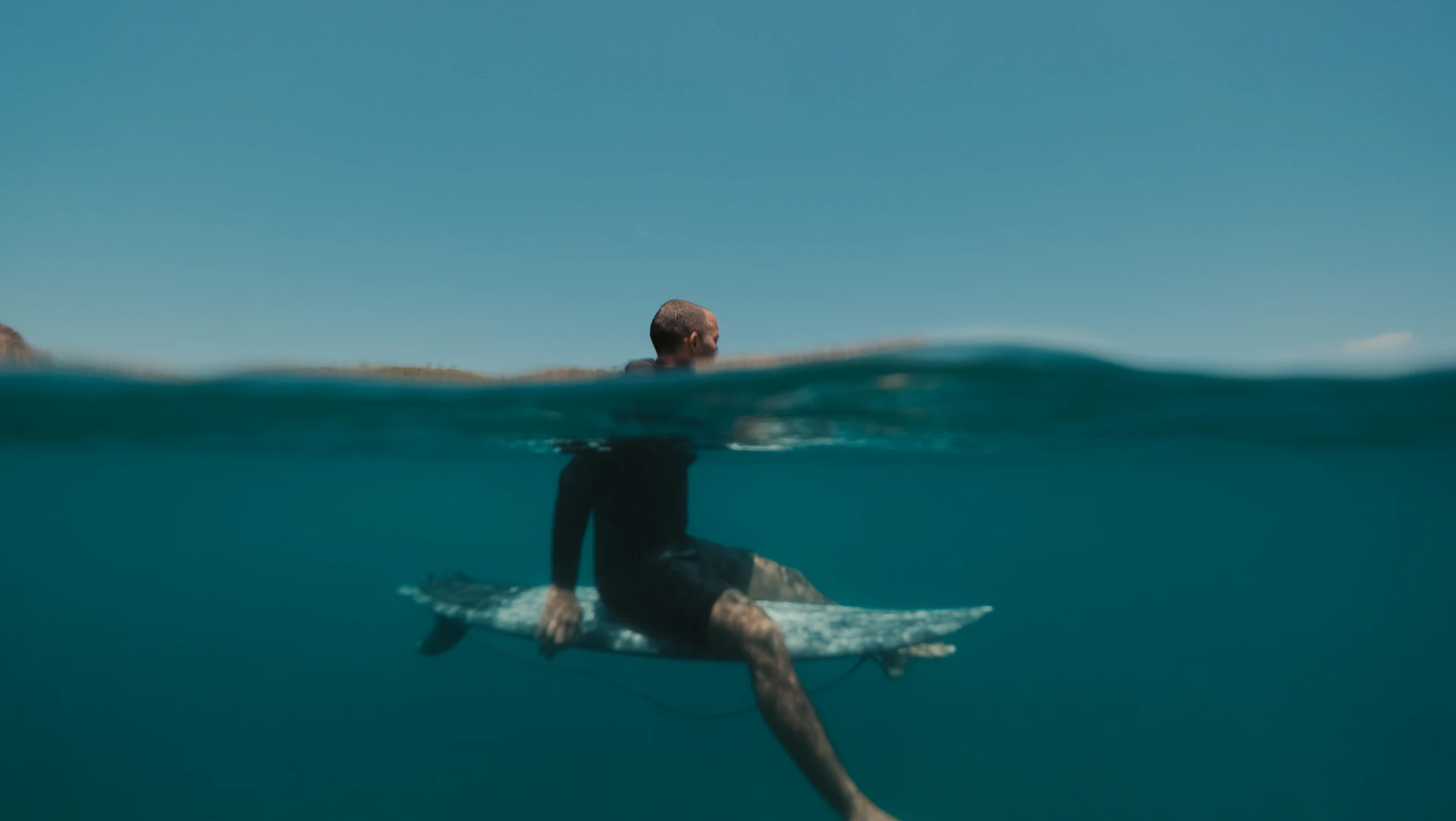
When you’re sitting on your board surrounded by nothing but water, your awareness narrows naturally. You feel the wind direction. You watch how the set waves stand up. You might even sense a rhythm to the sets.
And guess what? What we call waiting around for a wave is actually textbook mindfulness.
Think about it.
- Focused attention
- Sensory awareness
- Non-judgmental observation
- Acceptance of changing conditions
Because the ocean doesn’t care about what you didn’t do yesterday or what you plan to do tomorrow. It’s just… there.
H4: Key lesson:
You don’t practice mindfulness in surfing. Surfing practices it for you.
1. A surf and yoga retreat is the ultimate balance reset
Surprise, surprise… we’re going to give our own surf and yoga retreat a plug here. But to be honest, we’ve worked hard to create a space where everything converges.
Surfing challenges your body and mind in motion. Yoga refines your breath, flexibility and nervous system control. Add in guided breathwork, ice baths and sauna sessions and voila!
You’re no longer just training. You’re recalibrating.
At Xanadu Surf & Yoga, this isn’t a side offering. It’s built into the experience.
Because surfing will test you, but wellness practices bring you back to the centre and even reset your nervous system entirely. And together they have an almost magical way of transforming you.
Key lesson:
The ocean challenges you. The practice supports you. The balance changes everything.
Why does this all matter?
Great question. To us, mindfulness isn’t about sitting cross-legged for an hour. It’s about being fully engaged in what you’re doing. Surfing does that automatically.
It teaches:
- Patience while waiting for the right set
- Acceptance when you wipe out
- Calm under pressure
- Joy in small wins
- Respect for forces bigger than you
The real takeaway
The most respected surfers in history, from Laird Hamilton to Stephanie Gilmore to Gerry Lopez, don’t just train their bodies.
They train themselves in mindfulness too.
And then there’s us. Doing our best to channel their approach to surfing and presence so you feel comfortable meeting life’s challenges… both in the water and on land.