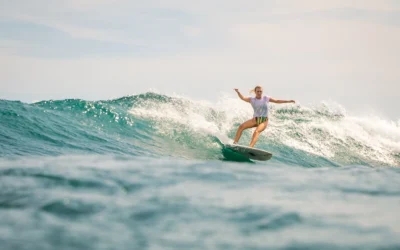

Surfing is already popular, but it’s getting more and more popular every year.
Naturally we’re stoked about this. Surfing is fun and healthy and it encourages an active lifestyle with plenty of socialising. It also gets you outdoors and fosters an appreciation for nature.
That’s a win in our books.
But with more and more surfers comes a greater emphasis on negotiating and decoding lineups. And as far as we’re concerned, this is fast becoming the most important (but underrated) skill for newcomers to learn.
We don’t want to spook you from learning surfing. Plenty of surf zones, Lombok included, can handle a fair amount of people in the water… provided everyone is respectful. But there’s no denying that catching more waves is key to not only getting better. It’s also key to enjoying surfing without feeling frustrated.
So, this is our attempt at giving you the lowdown on the reality of surfing with crowds. Enjoy!
Empty lineups are the exception, not the rule
Ever seen photos or drool-worthy Instagram clips of empty, glassy, nobody-around lineups? It’s mostly a myth these days. Especially in accessible, warm-water regions. If you’re seeing an empty lineup in a magazine or on your screen, there’s generally a catch. The break may be:
- Highly inaccessible
- Dangerous to surf
- Bigger than it looks
- In a cold-water country
- Not-so-friendly marine life (we’re looking at you, Australia)
Surfing has blown up. It’s not a Lombok thing, it’s an everywhere thing.
Paddle out in Australia, Morocco, Portugal or right here in Lombok and there’ll be bodies in the water. Our dry season (roughly May to September) is the busiest of the lot, with fewer spots working and everyone funnelled into the ones that are.
This makes learning how to handle lineups the most important skill
When people imagine themselves learning to surf, they generally regard popping up as the first challenge.
Standing up on a wave for the first time is no doubt difficult. We can testify to that. But it’s only one part of the puzzle. Being a surfer is more than just popping up on a wave and doing your best to stay upright. It’s also:
- Reading the wave: Knowing where it’ll break and whether it’s even worth going for
- Positioning: Parking yourself in the right spot so waves come to you instead of you chasing them
- Priority: Working out whose wave it is before you commit
- Wave selection: Choosing the right wave for you (and letting the other ones go)
- Confidence: Holding your own around other surfers without being a tool
To be clear, standing up is important for sure. But you shouldn’t put the cart before the horse. You can be a grand master at popping up, but if you can’t catch waves in the first place, well… what’s the point?
If you want the nerdy detail on what makes waves do what they do, our complete beginner’s guide to surf conditions breaks down how tides, wind and swell come together.
Learning to read a lineup 101
Nobody learns to drive by practicing in the carpark forever. Same deal with surfing. You’ll learn quicker riding empty waves, but as we said before… empty lineups are rare.
You might as well accept the fact that you’ll be sharing waves with other people.
Once you get over this fact, you can begin to deal with the reality in front of you and start catching more waves, getting more satisfaction out of your sessions and generally loving your surfing more.
1. Watch before you paddle
The biggest mistake beginners make is charging straight off. Slow down. Stand on the beach for five minutes and actually watch what the ocean’s doing before you get wet. You’ll learn more in those five minutes than in the first hour of flailing around.
- Clock where the waves are breaking
- Identify where people are sitting
- Find the channel (the deeper bit where waves aren’t breaking) for an easy paddle out
- Time the sets (the larger waves that break at various intervals)
2. Learn about priority
Priority sounds like some secret rulebook everyone but you has read. It isn’t. It’s one idea: one wave, one surfer. Now, Lombok and other beginner spots are an exception.
You’ll generally find more than one person surfing one wave. Our rule of thumb? Feel free to catch the same wave as someone else AT BEGINNER SPOTS ONLY. Once you progress, keep in mind the one wave, one surfer rule.
- The surfer closest to the peak (the breaking part of the wave) gets the wave
- If someone’s already up and riding towards you, let them go
- Don’t paddle for everything… wait your turn
3. Find your spot amongst the pack
Lineups can feel chaotic, but there are always small pockets or blind spots where you can sit and pick off waves.
This is more about thinking for yourself than anything else. And we don’t expect you to get it right away. Focus on settling into the surf spot first. Then, take a look around and ask yourself… is there somewhere where there are breaking waves but nobody paddling for them?
If the answer is yes and there’s no reason why you can’t surf there (too shallow etc.), go for it.
4. Surf the inside
You do not have to sit out the back with the pack and scrap for the biggest set wave of the day. When you’re learning, find your happy spot: the inside section.
The inside section is the end part of the reef breaking closest to the shore. The waves are generally smaller and softer. The only catch being that the rides are shorter and other surfers may already be riding them.
- Fewer people means less pressure and more waves for you
- Smaller reformed waves are perfect for practicing your pop-up
- You’ll get more rides in one session inside than a week fighting out the back
5. Keep showing up
That jittery feeling about crowds? Totally normal. And here’s the only thing that actually makes you better: getting out there and getting amongst it.
Every session where you read the lineup, sit somewhere smart and pick off a few good ones, you bank a bit more confidence. It compounds.
One day you’ll realise you paddled out into a busy lineup without a second thought and that’s when you know it’s clicked.
- You stop feeling like a tourist and start feeling like you belong (because you do)
- You pick up the etiquette by living it, not memorising it
- You go from “person avoiding the lineup” to “person getting their share”
Frequently asked questions
Q. Is Lombok too crowded to learn to surf?
Nope. Lombok’s got breaks for every level, including loads of mellow inside sections built for learning. It’s also still way quieter than Bali. If you’re weighing it up, we go deeper in is Lombok a good place to learn to surf.
Q. When is Lombok least crowded?
Wet season (roughly November to March) is generally quieter in the water. More spots working so everyone spreads out. Both seasons pump though. And a good coach just reads the day and takes you to the right break either way.
Q. Do I need to be able to surf already to come?
Not even slightly. We coach total beginners right through to advanced surfers. The point is learning the whole craft, lineups and wave-reading included, not just popping up.
Q. How do I not get in the way of other surfers?
Learn the basics of priority, sit somewhere sensible, start on the inside where it’s quieter. We coach all of it. Good etiquette makes you safer and a lot more welcome in the water wherever you rock up.
Q. What’s the most important skill for a beginner surfer?
Reading the lineup, hands down. Standing up matters, but knowing where to sit, which wave to grab and how to move around other people is what actually gets you catching waves consistently, anywhere in the world.
Can I still snag waves when it’s busy?
Absolutely.
The empty lineup isn’t coming, and here’s the kicker: you don’t need it. What you need is to learn how to read the break, pick your waves and hold your own. We can help with that! Come learn it with us in Lombok then take your new surf skills around the world.