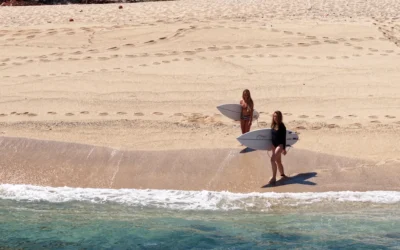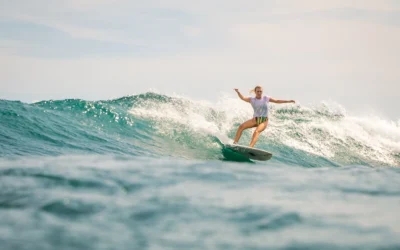
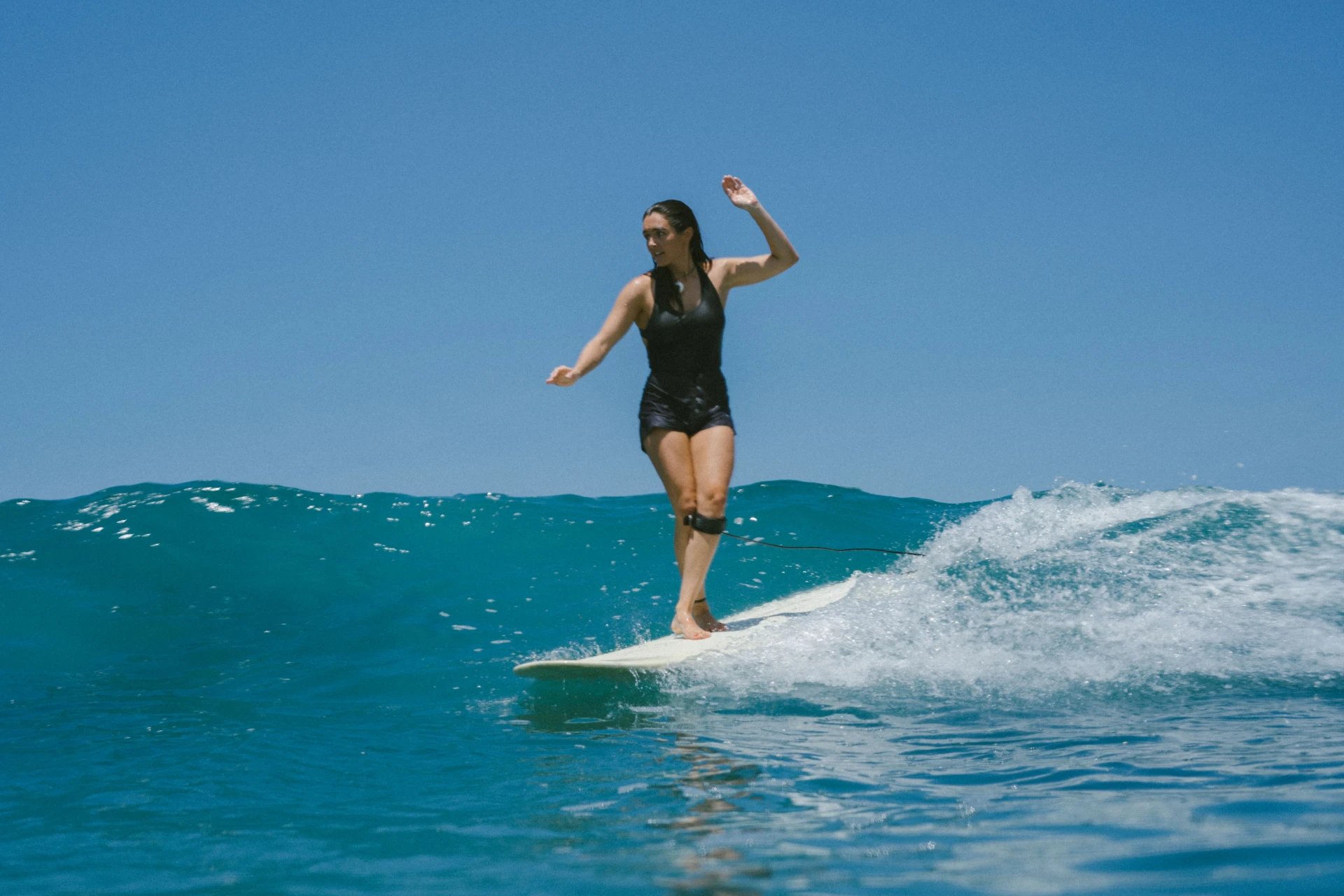
Yes, you can learn to longboard even if you have never surfed before BUT learning to surf a longboard starts with learning the foundations of surfing first.
We often hear from guests who love the style of longboarding and want to learn it from day one. And we understand why. Longboarding can look effortless: smooth turns, walking along the board, cross-stepping and, eventually, noseriding.
But before you start walking up and down a nine-foot (or more) board, you need to be comfortable catching waves, popping up, controlling your board and following the direction of a wave.
So what does the journey from complete beginner to longboarder actually look like?
What is longboarding?
Longboarding is a style of surfing traditionally done on surfboards around nine feet or longer.
The additional length and volume of a longboard give it plenty of paddle power and allow surfers to catch smaller, softer waves. But longboarding isn’t simply surfing on a bigger board.
As your surfing develops, so does the technique.
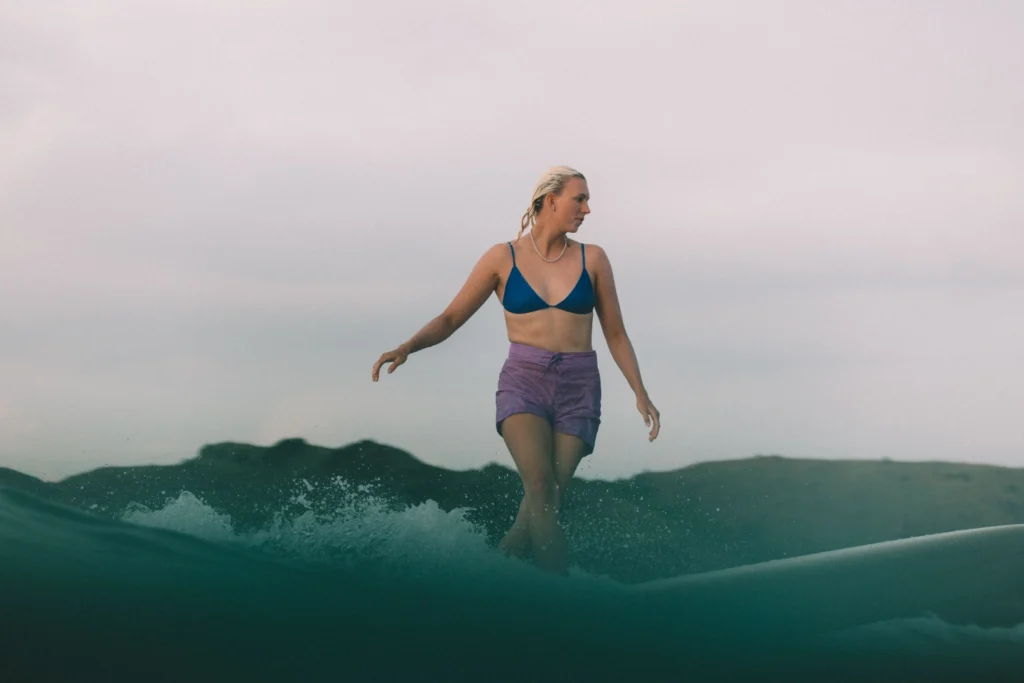
Rather than generating speed and making quick directional changes in the same way you might on a shortboard, traditional longboarding places an emphasis on positioning, trim, flow and moving around the board.
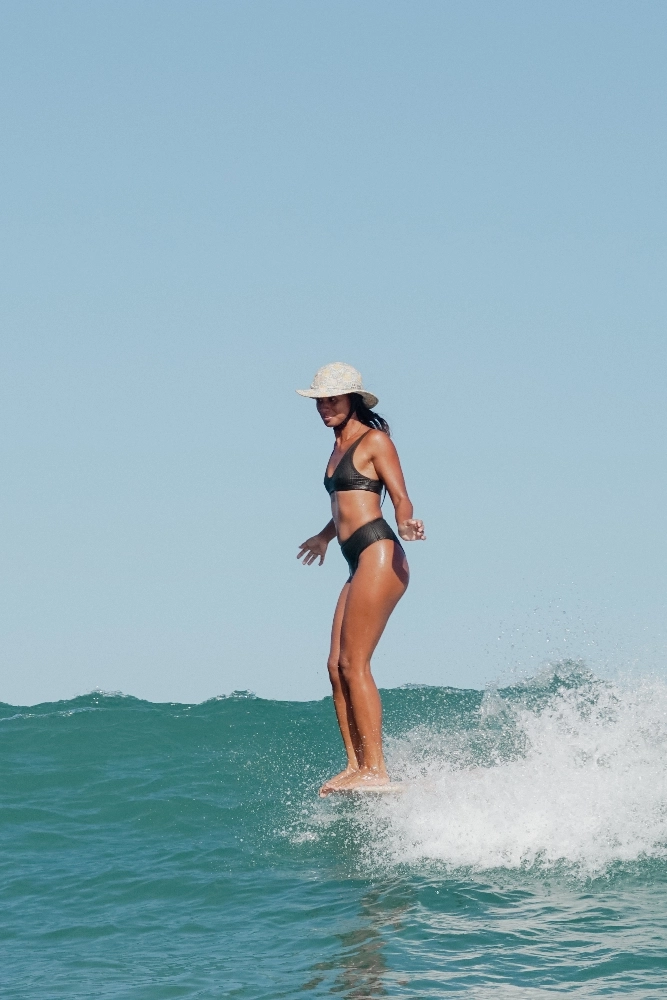
More advanced longboard techniques include cross-stepping, where the surfer walks along the board rather than shuffling their feet, and noseriding, where the surfer moves towards the nose while the board remains locked into the wave.
Those skills come later.
First, you need to learn to surf.
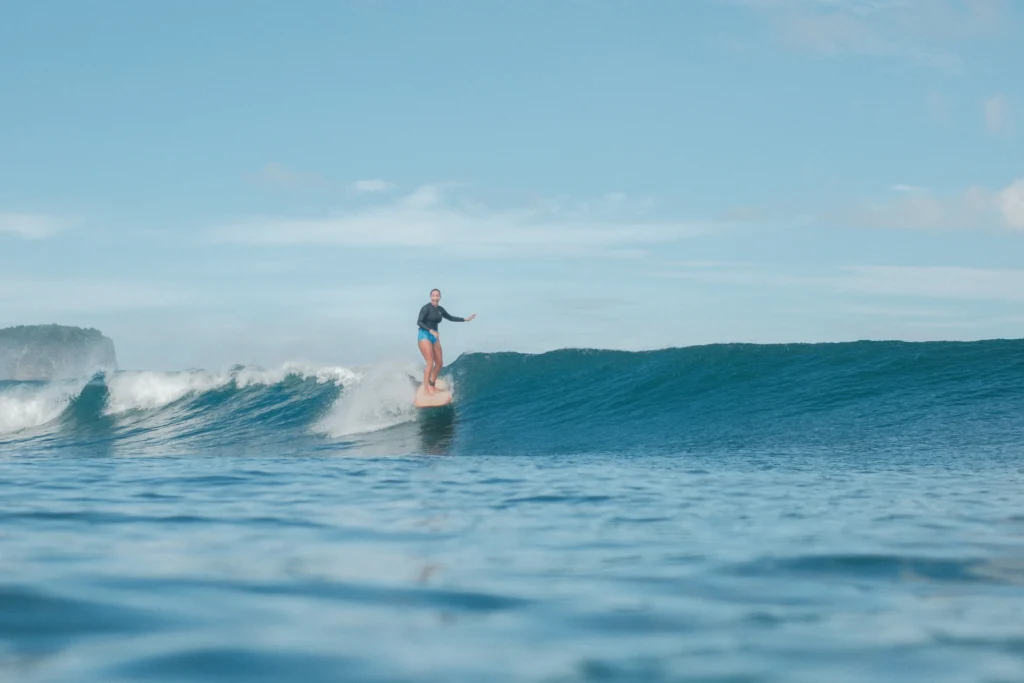

Can a complete beginner start surfing on a longboard?
If you have never surfed before, we normally wouldn’t put you straight onto a traditional hardtop longboard.
Instead, your first surfboard will usually be a large softboard.
Softboards are ideal for learning because their size and volume provide plenty of stability and buoyancy. They are easier to paddle and allow you to catch very small waves while you learn the basic movements involved in surfing.
Although it might not look like the classic longboard you eventually want to ride, this stage is an important part of learning to longboard.
You’re building the foundations that everything else will depend on.
Step 1: Learning the basics in the whitewater
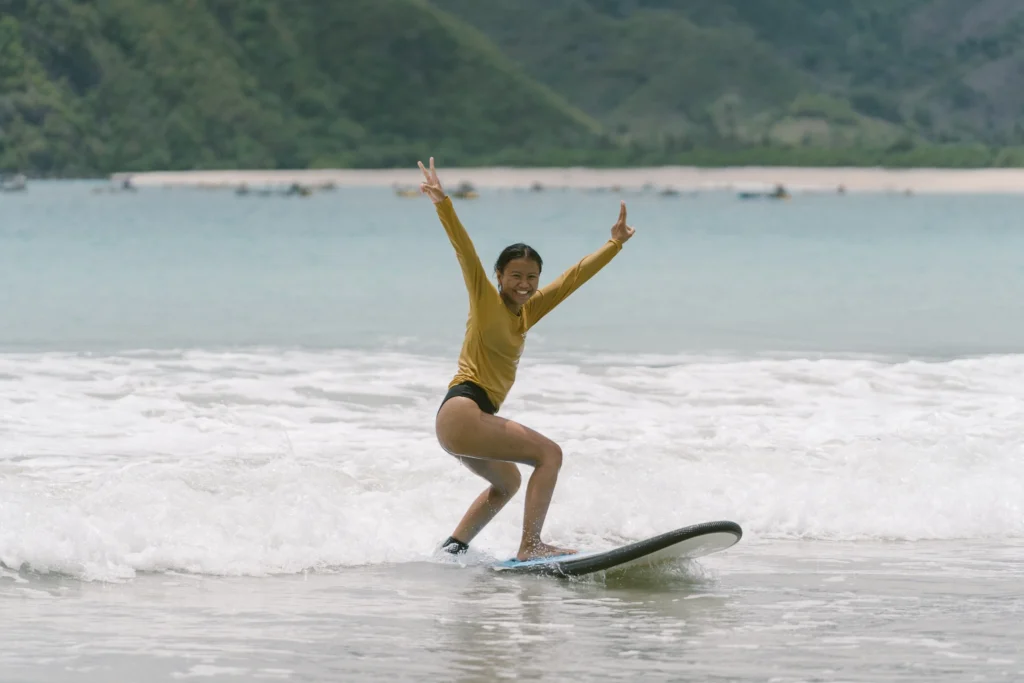
Your first sessions will normally take place in the whitewater – the broken part of the wave after it has already crashed.
At this stage, the goal isn’t stylish longboarding. It’s learning fundamental surf skills.
You’ll work on paddling, your pop-up, your stance and basic board control. You’ll begin to understand how shifting your weight affects the board and start learning how to turn in both directions.
Whitewater gives you the repetition you need without having to catch an unbroken wave at the same time.
Once your pop-up becomes more consistent and you can control the direction of the board, you’re ready to start taking those skills further out.
Step 2: Catching your first green waves
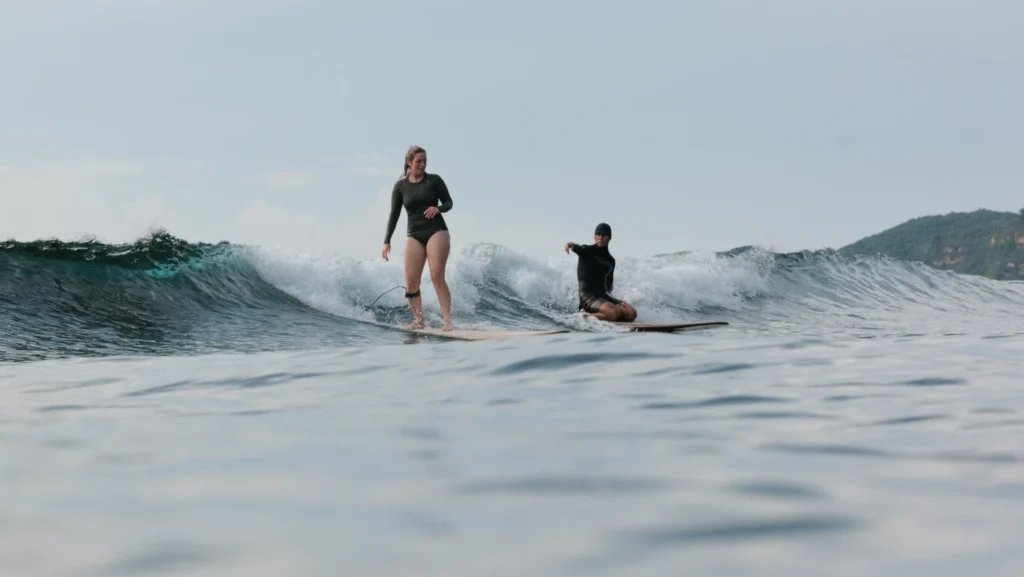
The next big milestone is learning to catch green waves i.e. waves that haven’t broken yet.
This introduces a whole new set of skills.
You need to learn where to position yourself, when to start paddling, how to match the speed of the wave and how to angle your take-off so that you can follow the open face rather than simply surfing straight towards the beach.
At first, those waves will usually be small and forgiving.
The objective is to become increasingly independent: catching waves, popping up consistently and beginning to follow the wave to the left or right.
This is where the foundations for longboarding really start to come together.
Step 3: Moving from a softboard to your first hardboard
Once you’re consistently catching small green waves, making your take-offs and starting to turn and follow the wave, we can begin thinking about moving you onto a hardboard.
For someone interested in longboarding, this will naturally be a longer board, often somewhere around nine feet.
That doesn’t necessarily mean jumping immediately onto a traditional single-fin longboard.
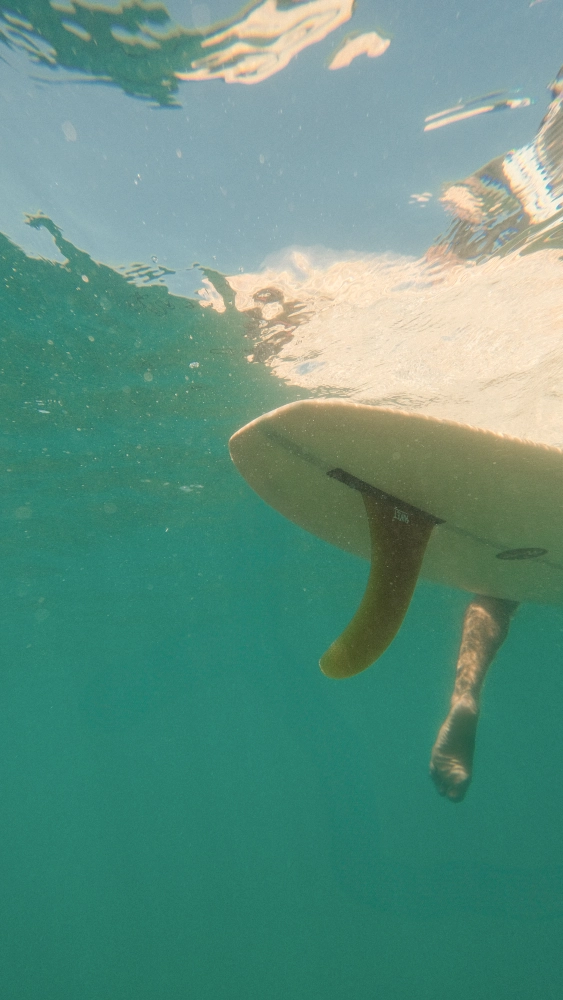
We often start newer surfers on a longboard with a thruster setup, meaning three fins. This can make the transition easier and the board more forgiving to turn while you’re still developing your technique.
Most importantly, you’re retaining the length and volume that help with paddling and catching waves.
Moving onto a hardboard is already a significant adjustment. There’s no need to introduce every element of traditional longboarding at once.
Step 4: Learning to control the longboard
This is an important stage that can sometimes get overlooked.
Before learning to cross-step, you need to be able to actually surf the board.
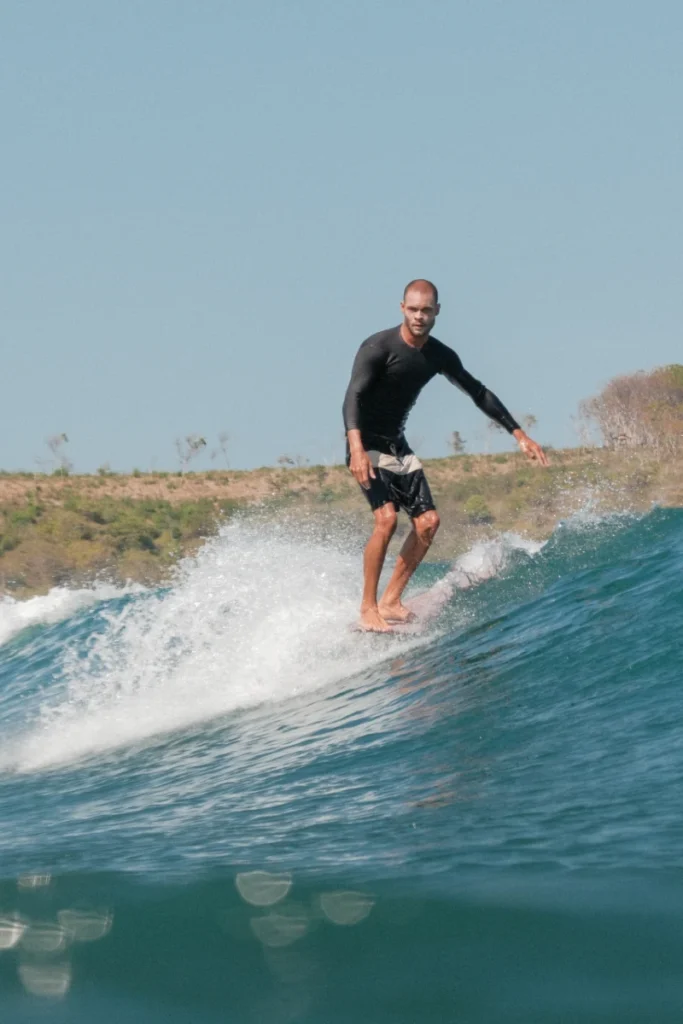
That means controlling your direction, following the wave, making turns and understanding where you need to position yourself on the board and on the wave.
A longboard gives you a large platform to move around on, but that doesn’t mean you should start walking immediately.
Your feet have different jobs depending on what the board needs to do. You may move back towards the tail to initiate a turn, then move forward again to accelerate and trim.
Learning this relationship between your position on the board and the board’s position on the wave is fundamental to longboarding.
Step 5: Learning to cross-step
Once your basic surfing is sufficiently comfortable, you can begin introducing more longboard-specific skills such as cross-stepping.
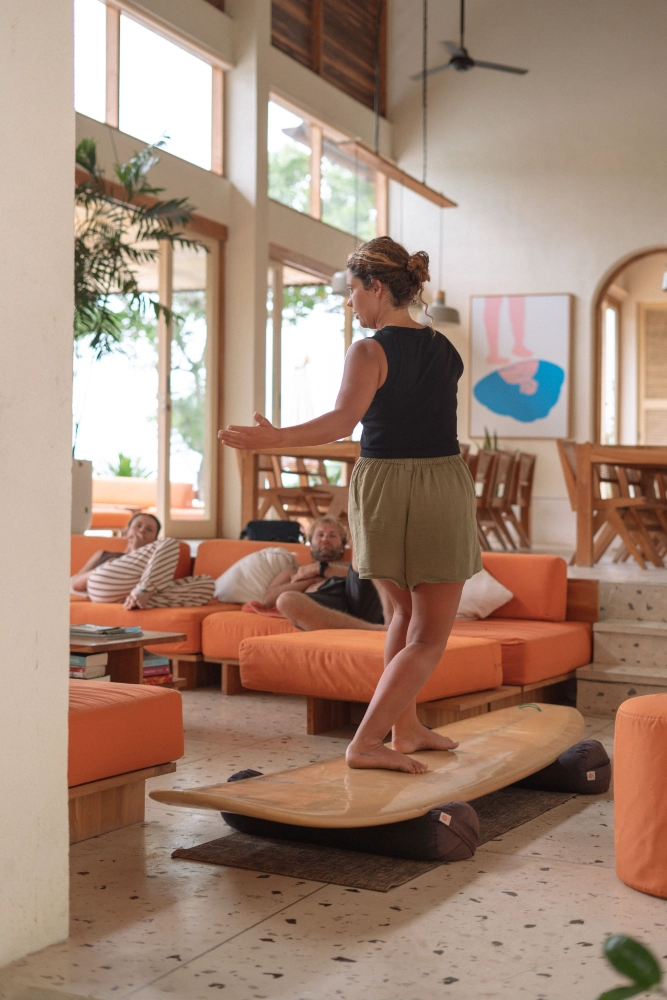
Cross-stepping means walking forwards and backwards along the board by crossing one foot over the other, rather than shuffling your feet.
But there’s an important distinction: being able to practise cross-stepping on land doesn’t mean you’re ready to cross-step on a wave.
Before moving forward on the board, you need enough control and wave awareness to put the board into a stable position.
In other words, the walking isn’t the starting point. It is something you add to surfing that is already working.
This is why becoming comfortable with your take-off, turns, trim and positioning first makes such a difference.
When can I start noseriding?
Noseriding is one of the most recognisable elements of traditional longboarding — and understandably one of the things many aspiring longboarders want to learn.
But getting to the nose is only part of the skill.
To noseride successfully, the board needs to be positioned correctly within the wave first. You need to understand wave selection, speed, trim and where to place the board so that moving towards the nose is actually possible.
That’s why we don’t treat noseriding as an isolated trick.
It is the result of all the skills that came before it.
How long does it take to learn to longboard?
There isn’t a set number of surf sessions or weeks before someone becomes a longboarder.
Surf progression depends on your consistency, fitness, confidence, previous experience, wave conditions and how frequently you’re able to surf.
Someone surfing several times a week will naturally progress differently from someone who surfs for one week every year.
The important thing is not to rush through board sizes or techniques simply because you have a particular image of the type of surfing you’d like to do.
If your goal is eventually to cross-step and noseride, spending time building strong foundations isn’t delaying your longboarding journey.
It is part of your longboarding journey.
Can I learn to longboard at Xanadu Surf & Yoga in Lombok?
Yes.
You don’t need to arrive at Xanadu already knowing how to surf a longboard.
If you’re a complete beginner, we’ll start by teaching you the fundamental skills you need to become an independent surfer. As you progress, your coaches can introduce you to different boards and begin moving you towards longboarding when you’re ready.
If you already catch green waves and can follow the wave independently, you may be ready to start experimenting with a hardtop longboard and developing more longboard-specific technique during one of our regular surf weeks.
The exact progression will depend on your current surf level rather than how many weeks, months or years you have been surfing.
For more experienced longboarders, we also run dedicated Advanced Longboard Weeks in Lombok, designed for surfers who already have solid foundations and want to work more deeply on their longboarding technique.
Do I need longboarding experience before joining Xanadu?
No.
If your long-term goal is to become a longboarder, tell us when you book.
We can assess where you are in your surfing journey and help you work towards it.
For a complete beginner, that might mean starting on a large softboard and learning your first pop-up.
For an improving surfer, it might mean catching small green waves independently and transitioning onto your first hardtop longboard.
For a more experienced surfer, it could mean refining turns, board positioning, cross-stepping or other longboard-specific skills.
You don’t have to wait until you’re a longboarder to start learning to longboard. But you do need to give yourself time to become a surfer first.
And that’s all part of the journey.