
So, you’ve decided to come to Lombok to surf. Good choice.
Maybe you’ve had a handful of lessons before and can pop up, but catching green waves without someone pushing you still feels like a distant dream. Or perhaps you’ve been surfing for a few years, yet somehow keep making the same mistakes.
Either way, you’re ready to get better.
The question is, do you book individual surf lessons as you go, or commit to a week-long surf camp?
We’ve been running surf camps in Kuta Lombok for 7 years every week all-year round, and while we obviously have a soft spot for the second option, the answer isn’t quite as straightforward as you might think.
Both can work. It really comes down to what you’re hoping to get out of your trip.
Surf Camp vs Individual Surf Lessons: What’s the Difference?
On paper, both involve getting in the water with a surf instructor.
But how the experience unfolds can be quite different.
With individual lessons, you usually arrange a session with a local instructor or surf school. You might book one lesson to see how it goes, then organise a few more throughout your holiday.
It’s flexible, relatively affordable and ideal if surfing is just one of several things you want to do in Lombok.
A surf camp, on the other hand, is generally built around a programme. You arrive on a set date, join a group of surfers at a similar level and follow a schedule that combines time in the water with other activities.
Of course, not all surf camps are created equal. Some are essentially accommodation with surf lessons attached. Others put a lot more thought into how guests actually learn.
At Xanadu, we’ve always believed that getting better at surfing takes more than simply showing up at a surf break every morning.
Which brings us to the biggest difference.
Why Surfing Every Day Isn’t Quite the Same as Being Coached Every Day
Let’s say you’re struggling with your take-off.
You keep nosediving, or perhaps you’re catching waves but going straight toward the beach instead of along the face.
During a one-off lesson, your instructor might spot the problem and give you some useful advice. Great.
But what happens the following day?
If you’re surfing with someone new, they might notice something completely different. You might spend half the session getting comfortable with each other before you can pick up where you left off.
With a structured coaching programme, there’s more continuity.
Your coach knows what you’ve been working on. They can see whether you’ve improved, whether you’re still making the same mistakes or whether it’s time to introduce something new.
And that matters because surfing is a funny sport.
You can understand exactly what you’re supposed to do while standing on the beach, only to paddle into a wave and forget absolutely everything.
We’ve all been there.
Getting better takes repetition, but it also takes knowing what to repeat. Otherwise, you can spend an entire holiday practising the same bad habits.
There’s Also the Question of Who’s Organising Everything
This is something people don’t always think about when comparing surf lessons with surf camps.
Imagine you arrive in Lombok, find a great instructor and have a brilliant first session. Naturally, you want to surf with them again tomorrow.
Except they’re already booked.
Or they’re available tomorrow but not the following day. Perhaps they’re taking another group out, and you can join, but the other surfers are at a different level.
You might end up spending part of your holiday messaging instructors, arranging transport and trying to coordinate everyone’s schedules.
Now, there are plenty of excellent independent instructors and surf schools in Lombok. If you book several sessions in advance with a reputable school, you may have a very smooth experience.
But when you’re arranging lessons day by day, there’s always a little more uncertainty.
One of the biggest advantages of a professionally organised surf camp is that all of this is taken care of.
At Xanadu, we have a dedicated surf team, including surf managers and coaches, who coordinate the programme throughout the week.
We organise the surf groups according to ability, select locations based on conditions and take care of transport and equipment.
You’re not dependent on one individual instructor being available every morning.
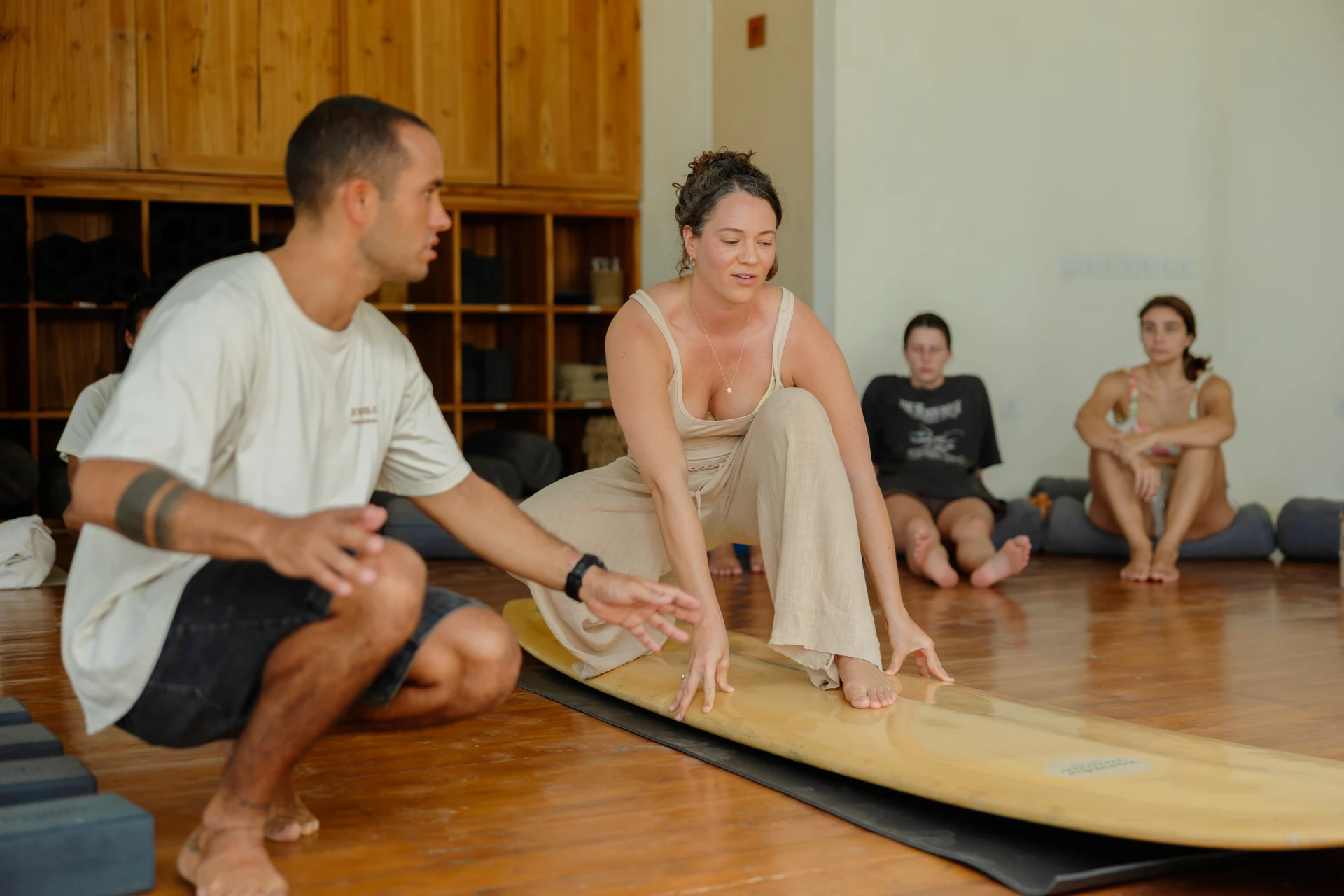
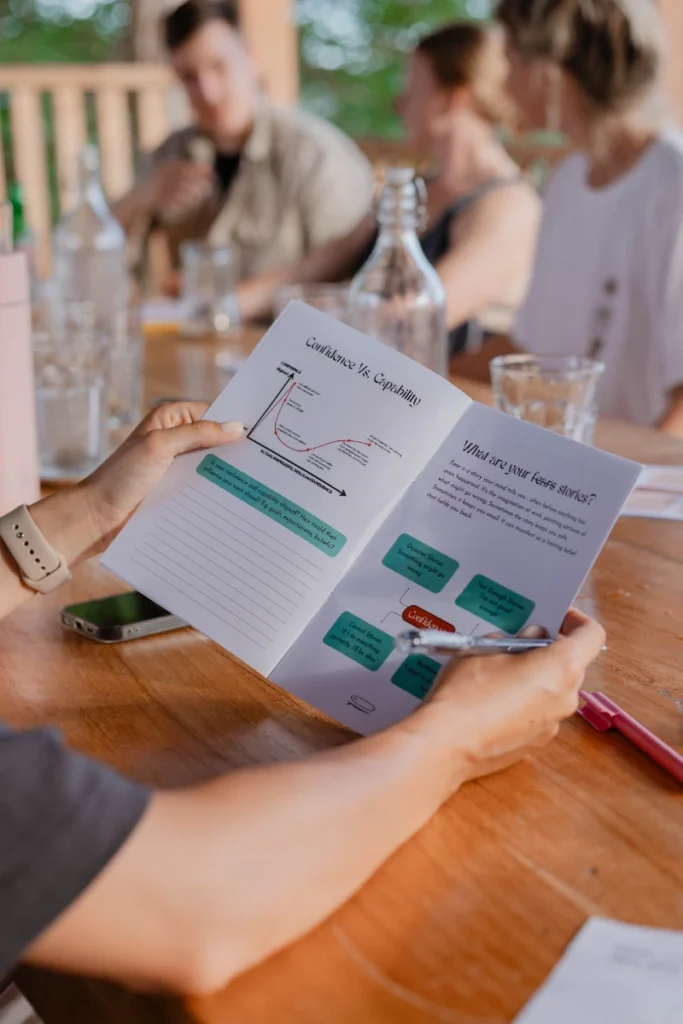
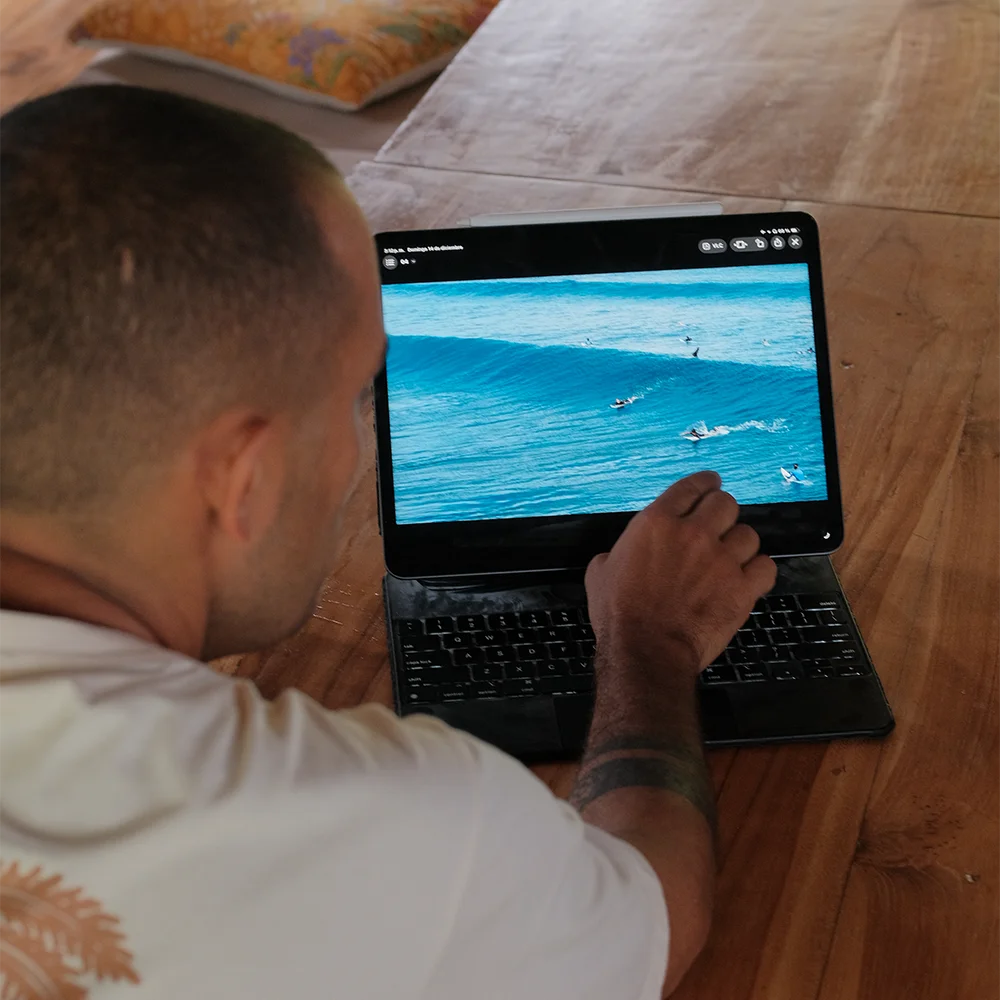
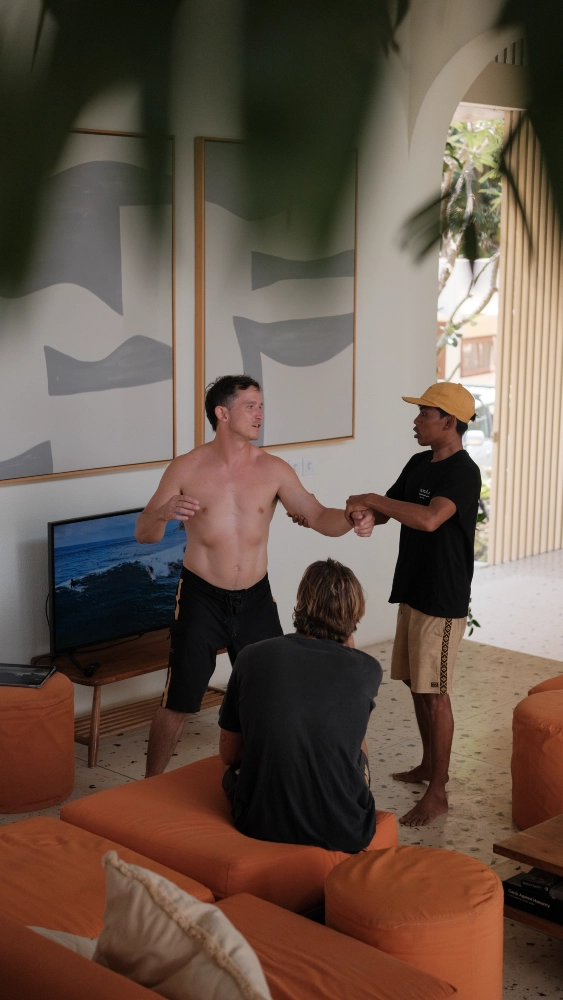
In most cases, you’ll surf with the same coach throughout the week, so they’ll get to know your surfing and what you’re working on. But if a different coach steps in, you won’t be starting from scratch. Our team works closely together and follows a shared coaching approach, so everyone is on the same page. And the learning doesn’t stop when you leave the water. What you practise during your surf sessions is reinforced through surf theory, video analysis and workshops, with the whole team working toward the same goal: helping you become a better surfer.
There’s also something quite nice about waking up, having breakfast and knowing that everything is already organised.
No negotiating lesson times. No wondering whether your instructor will be available. No trying to figure out where the waves might be working.
You just get ready to surf.
After all, you’re on holiday, too.
Can You Actually Improve Your Surfing in One Week?
Yes. But perhaps not in the way you imagine.
We occasionally meet people who hope to arrive as complete beginners and leave a week later surfing like they’ve been doing it for years.
We love the enthusiasm, but surfing doesn’t quite work like that.
Progression depends on so many things: your starting level, fitness, confidence, the conditions and how much time you’ve previously spent in the water.
For a complete beginner, a successful week might mean learning to pop up consistently, understanding basic surf safety and beginning to catch green waves.
For someone who’s already had a few lessons, it could mean finally catching waves without being pushed, learning to angle their take-off or becoming more confident with wave selection.
And for an intermediate surfer? Sometimes the improvements are much less obvious.
Perhaps you’re catching plenty of waves but losing speed halfway through. Or you’re trying to turn, but your board doesn’t seem particularly interested in cooperating.
That’s where more technical coaching becomes useful.
The important thing is that progression isn’t always about learning a new manoeuvre.
Sometimes it’s about making better decisions, understanding the ocean or becoming a little more independent.
And those things can make a huge difference to your surfing.
Video Analysis: Sometimes You Need to See It to Believe It
One of our favourite moments during video analysis is when someone sees themselves surfing and says something along the lines of:
“Wait. That’s me?”
Yep. That’s you.
You might feel like you’re bending your knees, only to discover you’re standing almost completely upright with your head between your knees (we’ve all been there!).
Or perhaps you’re convinced you’re looking down the line during your take-off, but the footage tells a different story.
Surfing happens quickly, and what we think we’re doing isn’t always what we’re actually doing.
That’s why we include video analysis in our surf programmes.
It gives our coaches an opportunity to show guests exactly what’s happening and explain what they can work on.
The idea isn’t to make everyone look perfect on camera. It’s to help surfers understand their own technique.
Because once you can recognise your mistakes, you’re in a much better position to correct them, even when your coach isn’t around.
Does Surfing Different Breaks in Lombok Help You Progress?
One of the things we love most about surfing in Lombok is the variety of waves.
Around Kuta, you’ll find everything from gentle beach breaks to long, mellow reef waves and more challenging spots that demand a fair bit of experience.
But we should clear something up.
Surfing as many different breaks as possible isn’t necessarily the best way to improve.
The goal is to surf waves that suit your ability and give you opportunities to practise.
Take Selong Belanak, for example. Its sandy bottom and generally gentler waves make it a popular place for complete beginners to learn the fundamentals.
Then there’s Gerupuk Inside, where the right conditions can provide lovely opportunities for developing surfers to practise catching green waves, angled take-offs and riding along the face.
Seger, closer to Kuta, offers a different kind of challenge. It’s a reef break where conditions can change considerably with the swell and tide, making it more suitable for surfers who already have some experience.
Further east, Ekas has several different waves. Inside Ekas can be relatively forgiving under suitable conditions, while Outside Ekas is generally more demanding.
And then there’s Mawi.
A beautiful wave, absolutely. But also powerful and technically challenging. Not somewhere we’d send someone who’s still figuring out how to catch their first green waves.
At Xanadu, we don’t work through a checklist of famous surf breaks.
Our coaches assess the conditions each day and choose locations based on the group’s ability, swell, wind and tide.
Sometimes that means returning to the same break several times during the week.
And that’s not a bad thing.
Getting comfortable with a wave can give you more opportunities to focus on your technique rather than spending every session figuring out an unfamiliar lineup.
Surf Coaching and Surf Guiding Aren’t Quite the Same Thing
You’ll often see the terms surf guiding and surf coaching used interchangeably around Lombok.
But they’re not exactly the same.
Surf guiding is primarily about local knowledge.
A good guide knows where to find suitable waves, how different breaks work and how to navigate unfamiliar lineups.
If you’re already a confident, independent surfer, that can be incredibly valuable.
Surf coaching goes a step further.
It’s about understanding your technique, identifying weaknesses and helping you improve specific aspects of your surfing.
Of course, there’s plenty of overlap. A good surf coach needs local knowledge, and an experienced guide might offer useful technical advice.
But if your main goal is to progress from beginner to intermediate, it’s worth checking that you’re booking actual coaching rather than simply someone to take you surfing.
What Makes a Good Surf Coaching Programme?
Not every surf camp puts the same emphasis on progression.
Some are more about the social side of surfing, which can be wonderful if that’s what you’re looking for.
Others focus more heavily on technique.
If you’re serious about improving, there are a few things we’d suggest looking into before booking.
How many surfers are there per coach?
This can make a real difference.
Imagine sharing one instructor with six or eight other surfers. Even with the best intentions, there’s only so much individual attention they can give everyone.
At Xanadu, we work with a maximum two-to-one student-to-coach ratio.
That gives our coaches more opportunities to observe your surfing, offer feedback and help you work on specific things.
Will you surf with people at your level?
A complete beginner and an experienced intermediate surfer need very different waves and coaching.
That’s why we separate our surf groups according to ability.
It means everyone has the opportunity to learn in conditions appropriate for their level, rather than trying to make one session work for surfers with completely different needs.
Is there anything beyond the surf sessions?
We believe some of the most useful learning happens outside the water.
Surf theory helps you understand things like wave selection, positioning and technique.
Video analysis lets you see what you’re doing.
Practical workshops give you opportunities to work on movements without the added pressure of an approaching wave.
At Xanadu, these elements are part of the programme rather than something you have to organise separately.
Is there a proper team behind the programme?
This one is easy to overlook.
A surf camp with an experienced team, clear schedules and good communication can provide a much more consistent experience than a programme that depends entirely on one person.
It also means someone is thinking about the bigger picture: the conditions, the groups, the coaches and how the week fits together.
What About Surf Instructor Qualifications and Safety?
Here’s something worth checking before booking any surf lesson, whether it’s with an independent instructor or a surf camp: who’s actually teaching you?
Lombok has plenty of talented local surfers, and some of them are fantastic instructors. But being a great surfer and being a great surf coach aren’t necessarily the same thing.
Knowing how to read the ocean, explain techniques, recognise when someone is struggling and respond appropriately when something goes wrong are all skills that require proper training.
When you book an individual lesson, you shouldn’t automatically assume your instructor holds a recognised surf coaching qualification. Some absolutely do, but qualifications and training standards vary between providers.
At Xanadu, our surf coaches are certified by the International Surfing Association (ISA). We also invest in ongoing training and professional development because we believe great coaching goes well beyond helping someone catch more waves.
It’s about understanding how people learn, adapting your approach to different abilities and knowing how to make good decisions in the water.
Our dedicated surf management team oversees the programme, from choosing appropriate surf breaks to organising groups according to ability. We also maintain a maximum 2:1 student-to-coach ratio, which means our coaches can keep a closer eye on everyone in the water.
Of course, the ocean is unpredictable, and no surf school can eliminate every risk. But having qualified coaches, a structured programme and an experienced team making decisions together helps us maintain consistent coaching and safety standards.
So, before booking any surf lesson or surf camp, don’t be afraid to ask about instructor qualifications, first aid and water safety training, student-to-coach ratios and how surf safety is managed.
They’re just as important as the price of the lesson, if not more.
Is a Surf Camp Worth the Extra Money?
That depends on how you’re looking at it.
If you compare the cost of one surf lesson with a seven-night surf camp, the lesson will obviously be cheaper.
But it’s not quite a like-for-like comparison.
With individual lessons, you’ll generally be paying for coaching, equipment and possibly transport.
With a surf camp, you’re often paying for accommodation, meals, daily surf coaching, transport, equipment and additional activities.
At Xanadu, our Surf, Yoga & Wellness programmes also include surf theory, video analysis and workshops, alongside yoga or mobility and recovery activities, depending on which location you choose.
So it’s worth looking at the overall cost of your holiday rather than comparing the price of a single lesson with an entire week-long package.
If you’re backpacking around Lombok and want to squeeze in a couple of surf sessions, individual lessons probably make more sense.
But if surfing is the main reason for your trip, and you want to spend the week learning rather than organising everything yourself, a structured programme can be a worthwhile investment.
What About Private Surf Lessons?
Private coaching deserves a mention because, for some surfers, it’s an excellent option.
If you’re already comfortable in the water and want to work on something specific, such as your bottom turn or wave positioning, having a coach focused entirely on you can be incredibly useful.
And if you book several sessions with the same coach, you can build the same kind of continuity you’d find in a structured programme.
The trade-off is that you’ll usually need to organise the rest of your trip yourself, including accommodation, transport and any additional learning or recovery activities.
For some people, that’s part of the fun.
For others, having everything organised is exactly why they choose a surf camp.
So, Surf Camp or Individual Surf Lessons?
If you’re visiting Lombok for a few days, want to try surfing for the first time or simply fancy catching some waves between exploring the island, individual surf lessons are a great option.
They’re flexible, accessible and a good way to experience surfing without committing to an entire week.
But if you’ve been surfing for a while and feel stuck, or you’re ready to take your surfing more seriously, we’d lean toward a structured coaching programme.
Not because seven days at a surf camp will magically turn you into an amazing surfer.
But because having regular feedback, a clear learning structure and a team that understands your progression gives you a better opportunity to work on the things that actually matter.
And there’s something to be said for spending a week surrounded by people who are just as excited about surfing as you are.
You learn from your coaches, of course. But you also learn from watching other surfers, sharing stories over dinner and realising that everyone, regardless of their level, is working on something.
That’s part of what makes surf camps special.
Frequently Asked Questions
Can you go from beginner to intermediate surfing in one week?
You can make meaningful progress in a week, but becoming a genuinely independent intermediate surfer usually takes longer. If you’re a complete beginner, your first week will likely focus on the fundamentals. If you’ve already had some experience, you might start catching green waves independently, improving your take-off or developing better wave-reading skills.
How many surf lessons do you need to become intermediate?
There’s no magic number. Some people progress quickly, while others need considerably more time. How often you surf, the conditions you practise in and the quality of your coaching all play a role. Consistency tends to matter more than simply counting lessons.
Is one surf session per day enough to improve?
Absolutely. A focused, well-coached session can give you plenty to work on, particularly when you’re surfing consecutive days. More time in the water isn’t always better, especially if you’re tired and starting to repeat mistakes. Surf theory, video analysis and recovery can all support your learning between sessions.
Are surf camps suitable for complete beginners?
Yes, provided the programme caters to beginners. Look for a camp that separates surfers by ability, offers a good student-to-coach ratio and chooses appropriate surf breaks. You shouldn’t feel pressured to surf waves that are beyond your level.
Is Mawi suitable for beginner surfers?
Generally, no. Mawi is a powerful reef break that’s better suited to experienced surfers. Beginners will usually have a much better learning experience at more forgiving locations such as Selong Belanak or suitable waves around Gerupuk.
Do I need to surf different breaks to improve?
Not necessarily. Surfing different waves can help you become more adaptable, but repeatedly practising at a suitable break can be just as valuable. The important thing is choosing conditions that match your ability and learning goals.
What’s the difference between surf coaching and surf guiding?
Surf guiding focuses on helping surfers find suitable waves and navigate unfamiliar breaks. Surf coaching focuses on improving technique through observation, feedback and targeted exercises. Some programmes combine both, so it’s worth checking exactly what’s included before booking.
Is video analysis useful for beginner surfers?
Yes. You don’t need to be an advanced surfer to benefit from seeing yourself on video. Even simple things like your pop-up, stance and where you’re looking during a take-off can be easier to understand when you can actually see them.
A Week of Surfing at Xanadu
At Xanadu Surf & Yoga, we’ve designed our programmes around the idea that surfing should be fun, challenging and rewarding, whatever your starting level.
Our seven-night Surf, Yoga & Wellness programmes in Kuta Lombok combine daily coached surf sessions with small groups, video analysis, surf theory and practical workshops.
We take care of the logistics, choose the waves according to conditions and make sure you’re surfing with people at a similar level.
All you need to do is show up, paddle out and give it your best shot.
And when you’re not surfing? There’s plenty of time for good food, recovery, meeting new people and enjoying life in Lombok.
Because while improving your surfing might be the reason you come, we hope you’ll leave with a few good stories, some new friends and a whole lot of motivation to keep surfing.
Explore our Surf, Yoga & Wellness programmes at Xanadu Village and Xanadu Retreat, and find the right surf level for your next trip to Lombok.