
One of the most common concerns we hear from first-time surfers is:
“I want to learn, but I’m not fit enough.”
The good news? You do not need to be super fit to learn how to surf or join a surf retreat.
In fact, many people arrive at their first surf retreat feeling nervous about their fitness level, only to discover that surfing is far more accessible than they expected.
The Myth That You Need to Be an Athlete
When people think about surfing, they often picture elite athletes paddling into huge waves, performing radical turns and spending hours in the ocean.
But that’s not what learning to surf looks like.
Beginner surf lessons are designed to introduce you to the fundamentals in manageable conditions. Your first goal isn’t to surf giant waves or paddle for kilometres. It’s simply to learn how to read the ocean, catch small waves and stand up consistently.
We’ve welcomed guests who hadn’t exercised regularly in years, guests in their 50s and 60s, and even people who were initially worried about whether they could manage a surf lesson at all.
Many are surprised by how quickly they adapt.
What Level of Fitness Do You Actually Need?
Rather than being “super fit,” it’s more important to have a basic level of mobility and be comfortable in the water.
You don’t need:
- Six-pack abs
- CrossFit-level fitness
- Marathon endurance
- Previous surfing experience
You do need:
- To be able to swim confidently
- A reasonable level of general health
- The willingness to challenge yourself a little
- Patience while learning something new
Surfing uses muscles that most people don’t use often, so everyone feels it during their first few sessions, even highly fit people.
In fact, we often find that gym fitness doesn’t automatically translate into surfing fitness.
Surfing Is a Skill Before It’s a Workout
One of the biggest misconceptions about surfing is that success comes primarily from strength.
In reality, surfing is far more technical than physical.
Positioning, timing, wave selection and technique matter much more than brute force.
A beginner who learns proper technique will often catch more waves than a stronger person trying to muscle their way through the session.
This is why structured coaching can accelerate progression far more effectively than simply spending longer in the water.
You Don’t Need to Surf All Day
Another common fear is that a surf retreat means spending six or eight hours a day surfing.
A good surf retreat isn’t designed to exhaust you.
It’s designed to help you improve.
At quality surf coaching retreats, sessions are planned around the best tides and conditions rather than simply maximising water time. There is time for recovery, theory sessions, video analysis, yoga, good food and rest.
Ironically, trying to surf all day often leads to fatigue and slower progression.
Most surfers learn more from one focused session than from several hours of exhausted paddling.
What If I’m Not Very Active Right Now?
That’s perfectly okay.
Many people join surf retreats because they want to become more active, not because they’re already athletes.
Learning to surf can be an excellent way to improve:
- Cardiovascular fitness
- Mobility
- Balance
- Coordination
- Confidence
- Mental wellbeing
You don’t need to arrive in peak condition.
You simply need to arrive with realistic expectations and an open mind.
Can Older Adults Learn to Surf?
Absolutely.
Surfing isn’t just for twenty-somethings.
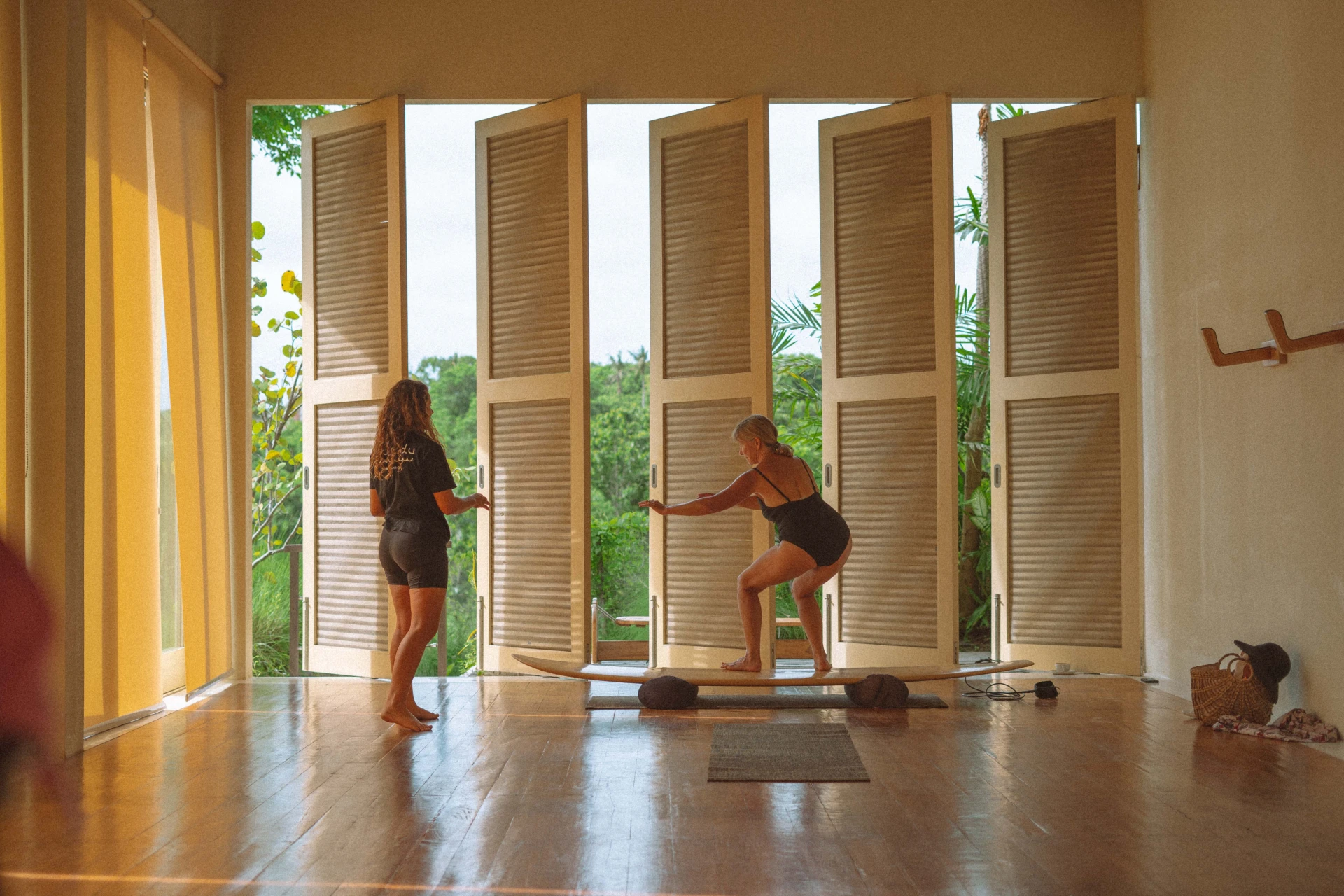
We’ve coached first-time surfers in their 50s, 60s and beyond. We’ve even had daughters bring their mothers to try surfing for the very first time.
The approach may differ slightly, and progression may happen at a different pace, but age alone is rarely the deciding factor.
Patience, consistency and good coaching matter far more.
How Can I Prepare Before My Surf Retreat?
If you’d like to make your first surf experience more comfortable, a few simple habits can help:
- Walk regularly
- Swim if possible
- Improve shoulder mobility
- Build basic core strength
- Stretch consistently
- Prioritise good sleep
You don’t need a specialised surf fitness program.
A few weeks of general movement and activity is usually enough.
The Real Question Isn’t “Am I Fit Enough?”
The better question is:
“Am I willing to try something new?”
Most people who learn to surf aren’t professional athletes.
They’re travellers, parents, office workers, business owners, students and retirees looking for an adventure, a challenge or simply a different way to spend a holiday.
Surfing will make you fitter over time.
You don’t need to become fit first before you begin.
Final Thoughts
If you’ve been putting off a surf retreat because you’re worried you’re not fit enough, you’re probably overestimating how much fitness surfing requires and underestimating how much technique matters.
The best surf retreats meet you where you are, provide structured coaching and create an environment where progression feels achievable.
You don’t need to arrive as a surfer.
You just need to arrive ready to learn.