At our boutique surf & yoga retreat in Lombok, we see something that happens time and time again. Usually somewhere between day two and day three of a guest’s stay.
They are sitting outside after breakfast. Coffee in hand. No particular agenda. They’ve already surfed or moved around on the yoga mat. And they realise… they haven’t checked their phone in two hours.
For most people, that hasn’t happened in years.
We’ve forgotten how to stop
Modern life doesn’t really give you the option to be bored.
There’s always a notification. A task. A funny/weird/unshareable DM sent from your best friend. The second there’s a gap, we fill it:
- Waiting for coffee? Phone out
- Watching the sunset? Might as well capture it
- Lying in bed? Better check emails one more time
We’ve started calling this productivity. Or at least a harmless habit.
But what it’s actually doing is keeping the nervous system permanently switched on. Low-level stimulation, all day, every day. No real pause. No real rest.
The result? A kind of tiredness that sleep doesn’t fix. You know the one. We’ve even talked about it before.
The problem isn’t that you need a holiday. It’s that you’ve forgotten how to have one
Most people arrive at our surf and yoga retreat in Lombok with a secret agenda.
Get fit. Catch lots of waves. Maybe meditate properly this time. Come back a noticeably better person by Sunday.
Completely understandable. High achievers tend to optimise everything (yes… including their downtime). But real rest doesn’t work like that. You can’t schedule a breakthrough. You can’t hustle your way to calm.
All you can do is create the right conditions. And then get out of your own way.
What “doing nothing” actually looks like
It’s not lying in a dark room staring at the ceiling.
It’s more like this.
You wake up when your body’s ready. You eat breakfast slowly (actually tasting it) because there’s nowhere you need to be for another hour. You paddle out, catch some waves. Maybe you’re brilliant. Maybe you’re terrible. It doesn’t really matter. We’ve seen it all and everything in between.
You come back, shower, find somewhere comfortable. You have a conversation with someone you met yesterday. A proper one. Eye contact and everything. No one glances at a phone.
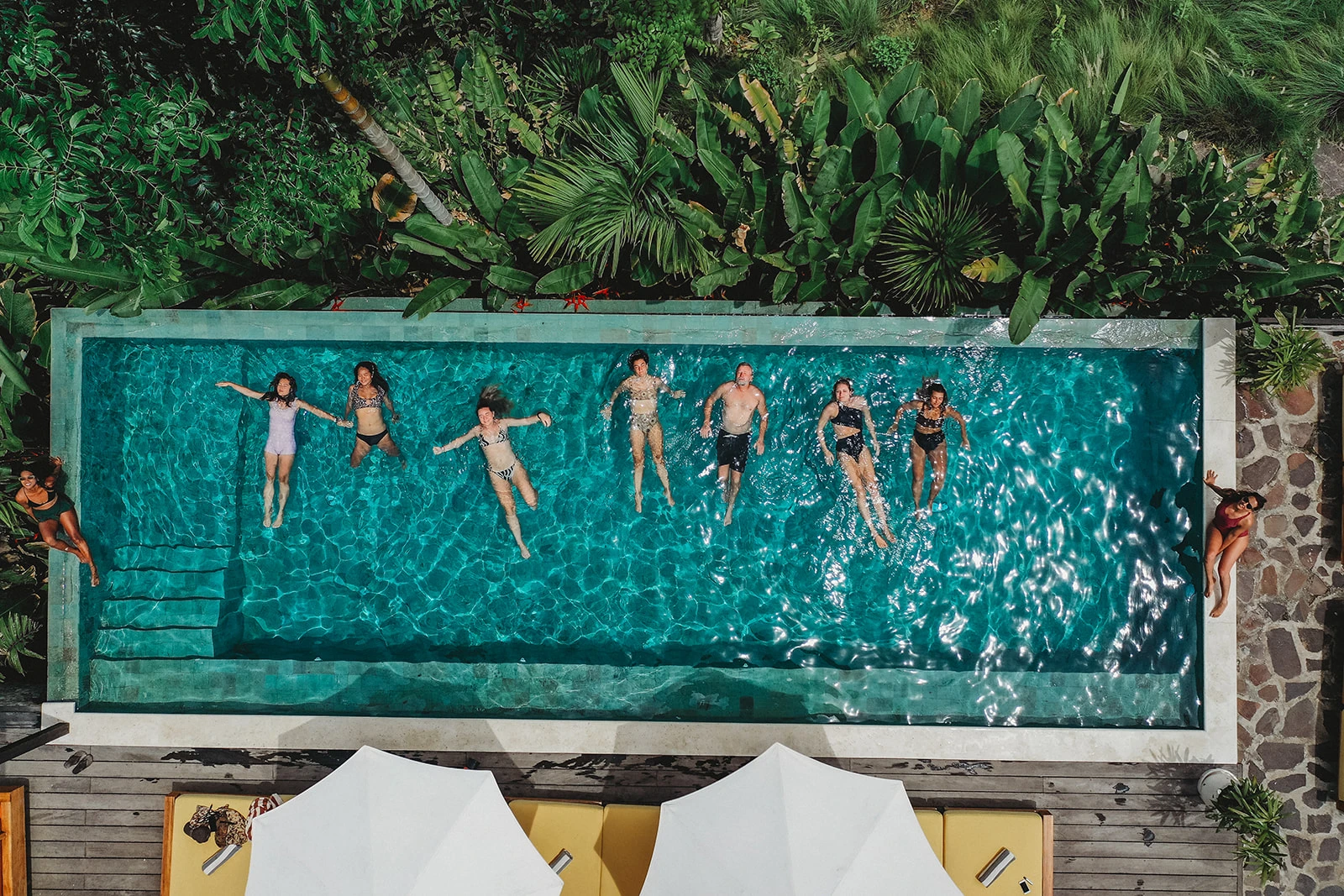
In the afternoon you read or nap or wander down to the water. You let the tide decide how things go. You eat dinner with the same people and talk about nothing particularly important. It’s one of the better conversations you’ve had in months.
That’s it. A full-nervous system reset thanks to surfing.
And by the end of it, you feel something unfamiliar. Not productive. Not accomplished. Just… easy. Quiet inside.
Why this is harder than it sounds
Even on holiday, most people carry a low hum of guilt when they’re not doing something useful. Rest has to be earned. Relaxation has to be deserved.
That voice, let’s call it your inner “Idleness Monster”, is the one asking whether you should be catching up on something. It doesn’t switch off just because you’ve booked a week in Lombok. It wants to be heard. Pursued. Felt.
But here’s the thing: your little Idleness Monster is exhausted too. It’s been running the show for a long time. Given half a chance, it actually wants to go quiet.
It just needs the right environment. Somewhere the default is slow. Where busyness isn’t rewarded and stillness isn’t suspicious.
The environment does most of the work
This is where Lombok earns its reputation and what we here at Xanadu do best.
The days have shape:
- Surf in the morning
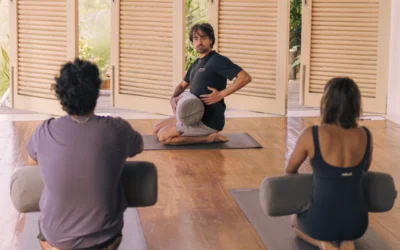
- Yoga in the afternoon
- Meals at a reasonable hour
- Enough space in between to just… be
Not a military timetable. More like a gentle rhythm that removes the need to make a hundred small decisions every day.
That sounds simple. But for someone used to managing a full calendar and fielding constant demands, handing over the schedule (even temporarily) is quietly revolutionary.
The mind, freed from logistics, doesn’t leap into existential crisis. It wanders. Softens. Starts noticing things it’s been too busy to clock for a while. The colour of the water in the afternoon. The way a wave sounds differs depending on how it breaks. The fact that you’re laughing more than usual.
Nobody’s checking in on deliverables. Nobody cares what you do for work. The ocean doesn’t know your job title.
Also, Lombok itself has a different rhythm to Bali. Slower mornings, quieter roads, long stretches of coastline and enough space to feel your nervous system unclench a little. That’s part of why so many people come here looking for a surf retreat, yoga retreat or simply a proper break from overstimulation.
What tends to happen by the end of the week
Guests don’t usually arrive talking about burnout. They arrive saying they just needed a break.
But by Thursday, the conversations get more interesting. People start talking about:
- Pace and whether the one they’re living at is actually working
- What they’re going back to and whether they want all of it
- The things they’ve been meaning to sort but never found the headspace for
Not everyone has a revelation. Believe us… that’s fine. Sometimes the win is simply that you slept eight hours, moved your body, ate well and felt like yourself again.
But something does shift in almost everyone (and not just these 7 types of people who thrive here).
Because rest isn’t passive. It gives something back. And doing nothing properly, without guilt and without an agenda, turns out to be one of the most useful things a person can do.
You probably need less than you think. But you need it properly.
A week doesn’t fix the things waiting for you at home.
But it reminds you what your baseline feels like. What your actual energy is underneath all the noise. What you’re like when you’re not just reacting to things all day.
Turns out that’s worth quite a lot.