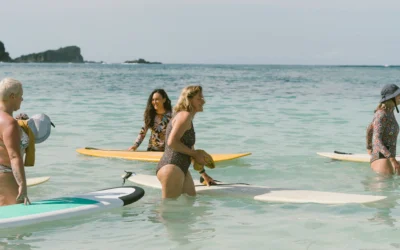
Most of Lombok looks exactly how you would imagine it.
Clean, crisp water. Heaps of waves to choose from. Dramatic headlands and jungle-covered hills and rice fields blanketing the valleys.
But every so often you round a bend in the beach and there it is.
Plastic.
Caught in the driftwood. Churning over in the shorebreak. Tucked behind the warungs where nobody meant for you to see it.
It’s not the whole island and it never was. But the pockets where the rubbish gathers are real and if you love this place they unfortunately stay with you.
Here’s the good bit though. It’s fixable and people are already on the job.
We came across WaveNova and felt properly hopeful for the first time in ages, because their take on ocean plastic is about the smartest and most human we’ve seen out here.
We’re proud to back them. But this story belongs to them.
Where WaveNova started
WaveNova grew out of one uncomfortable truth.
Indonesia makes around 6.8 million tonnes of plastic waste a year and more than half gets burned, dumped or ends up in the water.
That’s among the worst on the planet.
Andrew, who runs it, is from Taiwan. He came to Lombok four years ago, loved it from day one but couldn’t unsee the plastic after that.
Then, in a warung at Tanjung Aan, the woman working there heard he was Taiwanese and lit up. Her dream was to work in Taiwan as a nanny. That floored him. The plastic and the people beside it were the same story.
So he built WaveNova across two countries. Taiwan cleanups raise money, it flows back to fund the work here and that work opens jobs for women in remote villages.
How the model works
Here’s what we love about WaveNova: its three-phase model that’s applied to every village.
Phase 1 builds trust
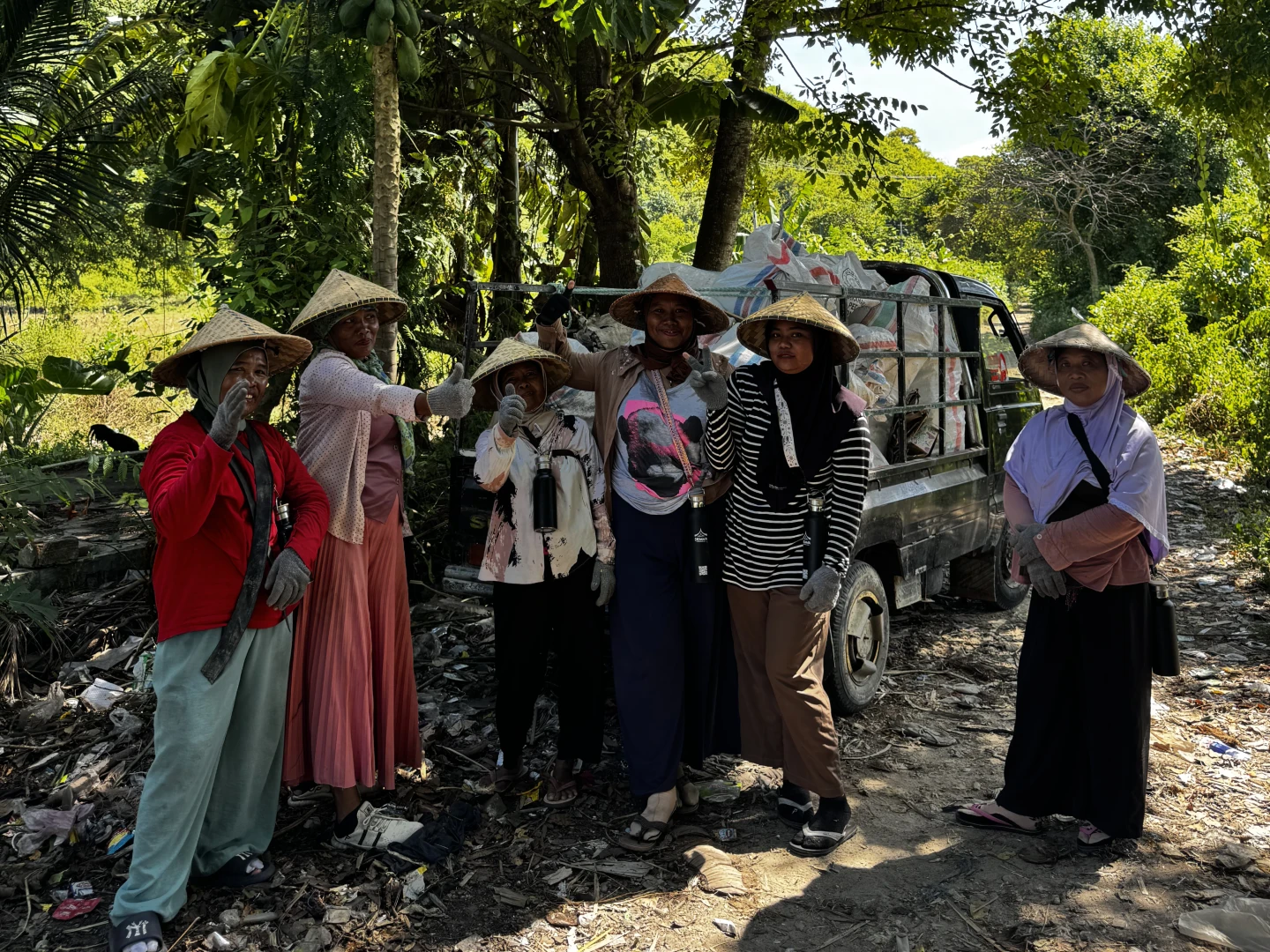
The project hires local ibu-ibus to run the waste collection and learn their own community from the inside.
Phase 2 builds a sorting station
The team sets one up right there in the village.
Phase 3 turns the village self-sufficient
It pays its own way through collection fees charged to local tourism businesses instead of leaning on donations forever.
Selong Belanak proves phase 3 works in the real world and not just on paper. Alongside their partner SBCA, that model has run on local business fees for over a year, signing up 76 paying member businesses and diverting 276,731 kg of waste in 2025.
Why the crew has to be women
The crew doing the collecting and sorting is women.
When earlier projects hired whoever wanted the work, some of the young guys found a shortcut. Collect the rubbish, take the pay, then scatter the same rubbish the next day and collect it all over again.
A young man can drift to the next village and pick up another kind of job without much bother.
The women can’t.
The widows and the older ones stay put with almost no way to earn. The work hands them a bit of money and a bit of freedom, whether they share it at home or keep it for themselves.
They also commit because they know the plastic harms their kids’ health.
Then there’s the knock-on nobody planned. The kids watch their mums head out to clean up the village and it sets an example! Some even pitch in. A mother looking after her kids and her kids looking up to her.
A lot of this came from Lulu, a dear friend of ours who founded ninē-ninē and helps keep things running on the ground. She drew the line early: women do the collecting and the sorting. No compromises. And she was right.
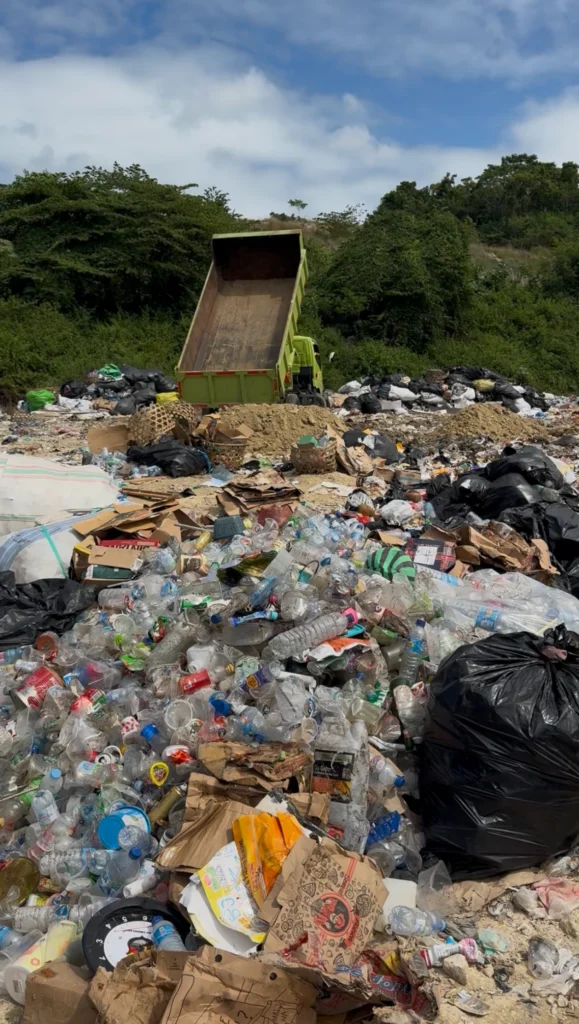
What happens to the rubbish
Every household gets two bins, one for residual waste and one for recyclables.
The team sorts everything it collects from homes and beaches then splits the plastic by type: PET, PP, HDPE, LDPE and PS.
From there, each type gets a second life.
HDPE and PP (High-Density Polyethylene and Polypropylene)
Our friends at Honest Made turn the HDPE and PP into classroom furniture, which we love. Picture kids sitting at desks built from the plastic their mums pulled off the sand.
Money moves through the system too.
Where villagers carry plastic straight to Honest Made, they walk away with cash on the spot.
In the villages WaveNova runs directly, buying plastic from villagers hasn’t kicked off yet, but a regular plastic sell day sits next on the list, part of the same self-sufficient phase 3 model already humming at Selong Belanak.
The people who make it happen
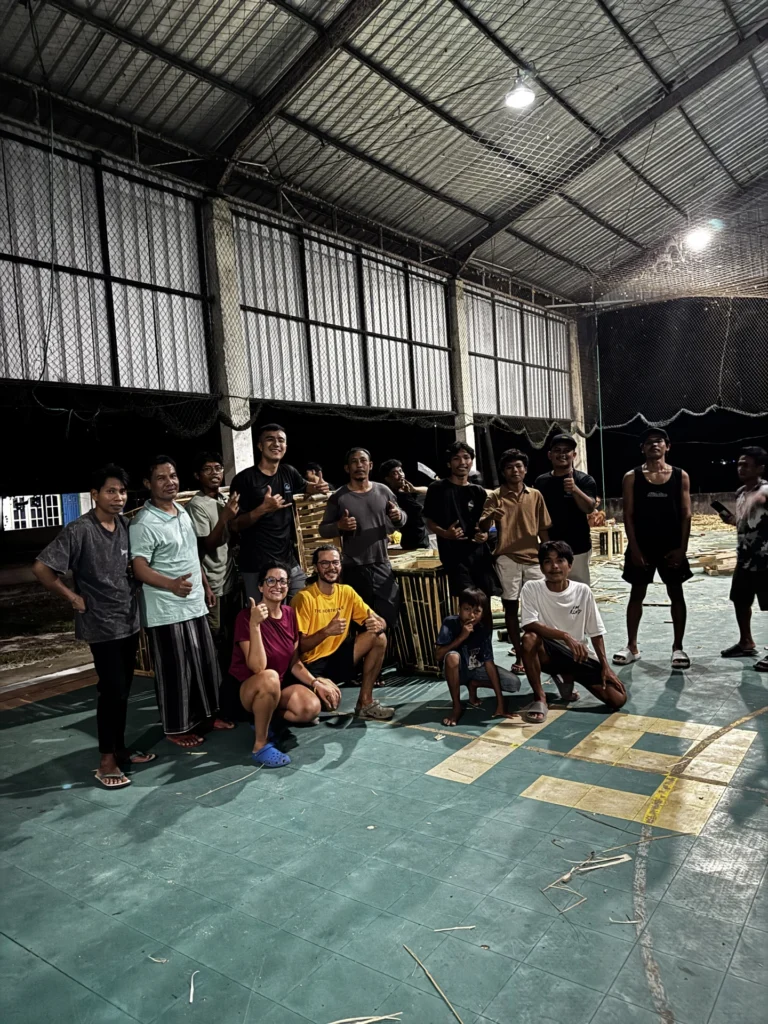
Andrew started WaveNova and still runs it. By his account, watching that crew come together is one of the things both he and us love about the whole project.
A handful of people keep it moving on the ground, project managing across the villages, running the local crews and making sure the collecting and sorting actually happens.
That’s community in action.
Around them sits a web of partners who decided ego mattered less than fixing the problem.
SBCA in Selong Belanak have run their waste station for five years and share everything they know. Eco Desa covers Mawun, Awang and Ekas. GPS_ggi handles Gili Gede. Honest Made takes the sorted plastic and gives it a new shape.
That’s the part that gets us.
A bunch of people and outfits chose to join forces instead of each launching their own little organisation. And from where we sit, it pays off week after week.
FAQ about WaveNova x Xanadu
Q. What is WaveNova?
WaveNova is an ocean plastic project that runs beach cleanups and village waste programmes across Lombok, funded partly through monthly cleanups and fundraising in Taiwan. It hires local women to collect and sort rubbish, then works with recyclers to give the plastic a second life.
Q. Where does WaveNova work in Lombok?
The project operates in villages including Awang, Ekas, Mawun and Gili Gede, with a proven self-sufficient model running at Selong Belanak. It focuses on remote, non-touristy villages rather than the busy zones around Kuta Lombok.
Q. How does WaveNova handle rubbish once it is collected?
Households sort waste into residual and recyclable bins, then the team separates the plastic by type, PET, PP, HDPE, LDPE and PS. Honest Made turns HDPE and PP into classroom furniture, and WaveNova is exploring a machine to convert other plastics into fuel.
Q. Why does WaveNova hire women for its cleanups?
Women in these villages, often widows or older residents, have few ways to earn and stay committed because they understand how plastic affects their children’s health. Their work also sets an example for the next generation.
Q. Does WaveNova run beach cleanups I can join?
Yes, the project holds cleanups on both sides of its operation, in Taiwan and in Lombok. Follow WaveNova for dates and details on how to lend a hand.
Q. Why is there so much plastic on Lombok’s beaches?
Indonesia is one of the largest contributors of ocean plastic in the world, and many remote villages have never had proper waste collection. Rubbish often ends up dumped near the shore, where the tide carries it straight into the water.
Q. How does Xanadu fit into all this?
Xanadu was WaveNova’s very first business partner in Lombok, backing the project right from the start. Supporting local cleanup and waste work is one of the ways we try to give back to the island that hosts us.
Q. What is Xanadu’s approach to sustainability?
We believe a retreat should leave its patch of coast better than it found it, not just profit from the view. That means partnering with grassroots projects like WaveNova, cutting waste where we can and putting real money behind the people doing the hard work on the ground. Learn more about our sustainability policy.
Q. Can I visit Xanadu and get involved in local environmental projects?
Guests staying with us can learn about the work happening around Kuta Lombok and, when timing lines up, take part in cleanups and other community initiatives. Get in touch before your trip and we’ll point you toward what’s on.
Q. How can I support WaveNova or donate?
Visit wavenova.org or follow them on Instagram to keep up with the work and find ways to get involved or contribute.
Where WaveNova is heading
Further out. Past the tourist zones around Kuta, into the remote villages that never had proper waste collection, backed by more businesses willing to fund the harder corners.
It’s already happening.
WaveNova now covers Awang Tengah harbour and a new partnership is taking shape in Ekas with the local homestay community and Innit Resort. We backed this from the very start as WaveNova’s first business partner in Lombok and we’re staying in for the next push.
Even our co-founder Ola still talks about the day she sat sorting rubbish beside the ibu-ibus and loved it enough to keep coming back.
Now there’s a crew of committed people, most of them women, changing Lombok for the better one village at a time.
We couldn’t be more stoked to be part of it.