
If you’ve been searching for a surf camp in Lombok, you’ve probably come across dozens of options.
But not all surf experiences are created equal.
Some are built around flexibility and volume.
Others are designed for structured progression, intentional coaching, and long-term improvement.
So what’s the real difference between a surf camp and a surf coaching retreat — and which one is right for you?
What Is a Surf Camp?
A surf camp is typically a more casual, social experience built around surfing, accommodation, and meeting other travelers.
Most surf camps in Lombok offer:
- Flexible arrival dates
- Daily surf sessions (sometimes 2x/day)
- Mixed-level groups
- A more relaxed schedule
- A strong social atmosphere
For many people, especially beginners or short-term travelers, this can be a fun and accessible way to get into surfing.
The Pros of a Surf Camp
- Easy to join anytime
- Social and community-driven
- Great for first-time surfers
- Lower commitment
The Limitations of a Surf Camp
The flexibility that makes surf camps appealing can also limit progression.
When people are constantly arriving and leaving:
- Groups change daily
- Coaches don’t get to know you deeply
- Feedback can be inconsistent
- Sessions often focus on “getting more waves” rather than improving technique
Without structure, it’s easy to repeat the same mistakes without realizing it.
What Is a Surf Coaching Retreat?
A surf coaching retreat is designed around one core goal: helping you become a better surfer.
Instead of drop-in sessions, everything is structured to support progression over time.
At a coaching retreat, you can expect:
- Fixed start and end dates (weekly programs)
- Small, level-based groups
- One surf per day (quality over quantity and time for theory which is equally important for your surf progression)
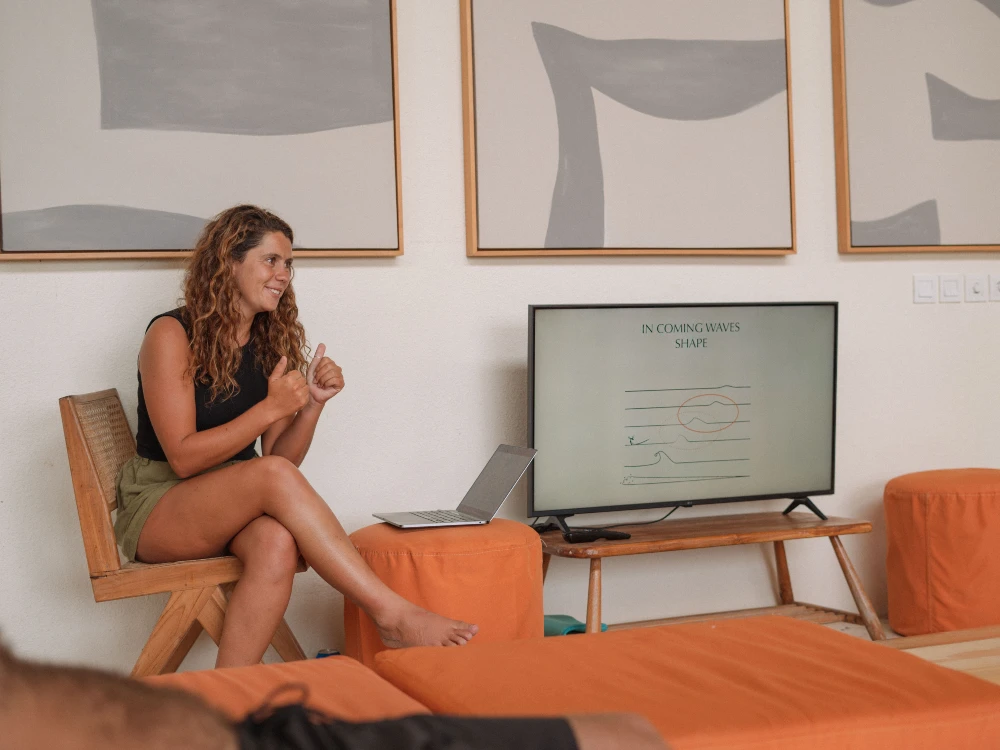
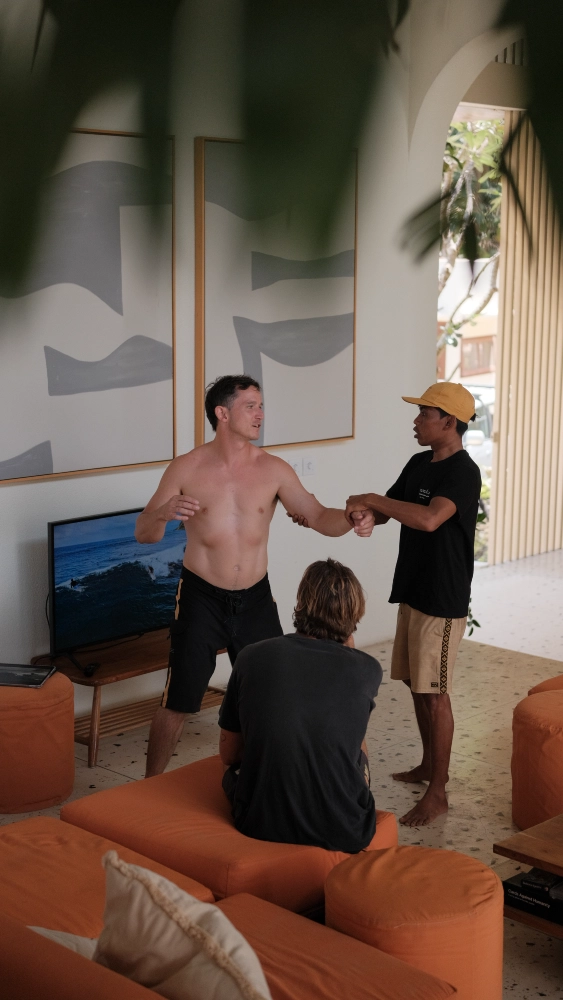
- Video analysis and surf theory sessions
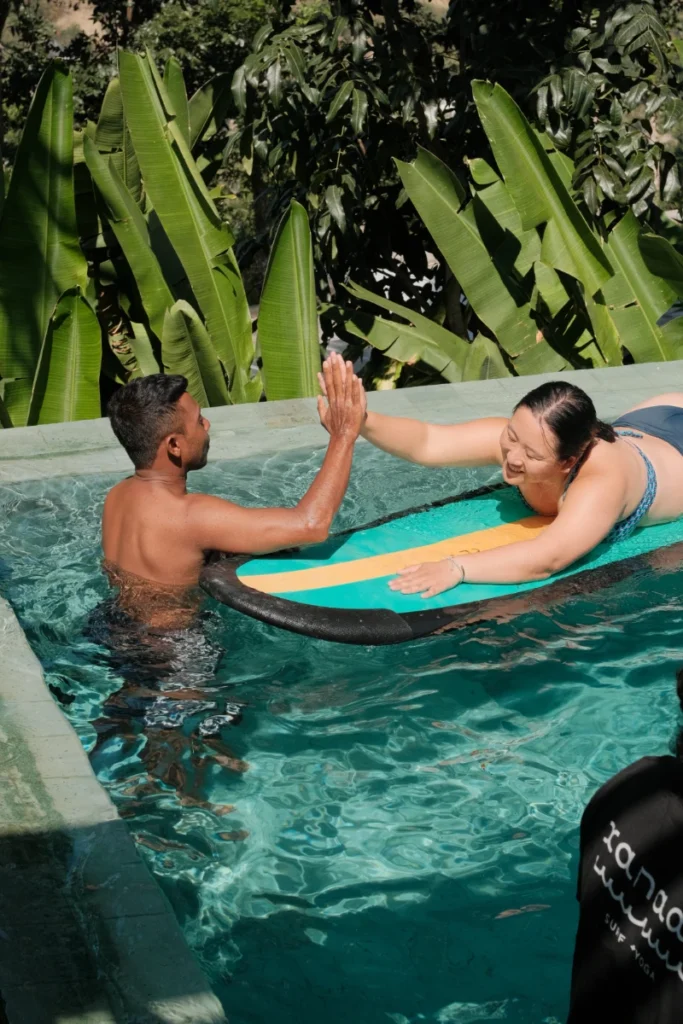
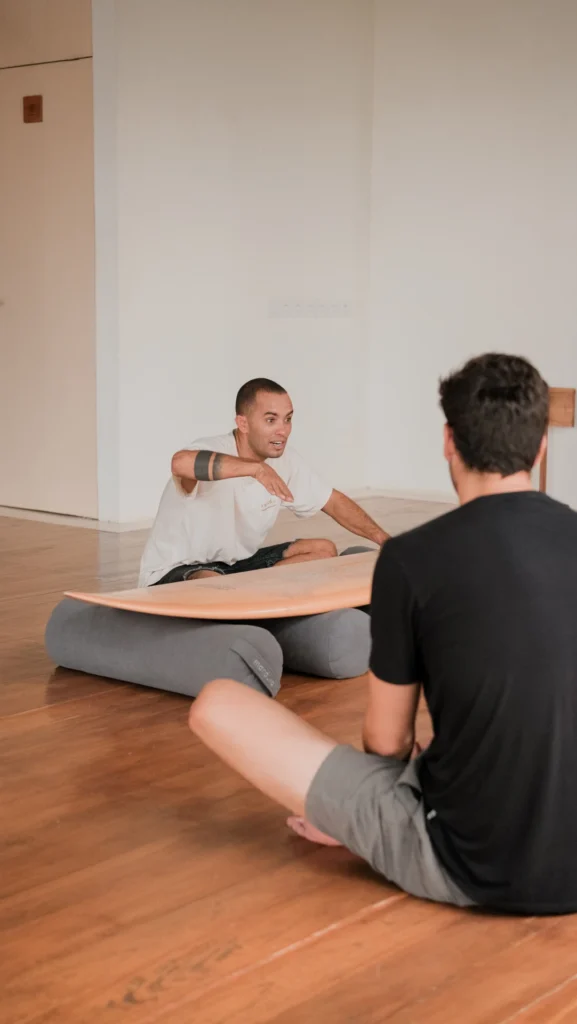
- Land drills and technique breakdown
- Integrated recovery (yoga, mobility, rest)
It’s a completely different approach — one that prioritizes learning, not just wave count.
Why Structure Matters for Surf Progression
One of the biggest differences comes down to consistency.
In a structured week:
- Coaches follow your progress every day
- They understand your habits, strengths, and blind spots
- Feedback builds on itself instead of starting from scratch
- They have time to help you build the right mindset to unlock progression
This creates something most surf camps can’t offer: real, measurable improvement.
Surfing more waves doesn’t automatically make you better.
Surfing with awareness, feedback, and intention does. Read more about Slow Progression vs Performance here.
Small Groups vs Drop-In Culture
If you’re even slightly introverted or feel nervous about joining a group, this matters more than you think.
In smaller, structured retreats:
- Everyone arrives at the same time
- The group evolves together
- There’s space to build trust (with both coaches and other guests)
- Guests are split into smaller groups based on their level
Instead of constantly adjusting to new people, you settle into a rhythm and that’s where confidence grows.
Quality Over Quantity: The One-Surf-Per-Day Approach
It might sound counterintuitive, but more surfing isn’t always better.
Many surf camps push for two sessions a day.
But without proper feedback and recovery, fatigue kicks in and technique often suffers.
A coaching retreat focuses on:
- Surfing at the right tide and conditions
- Being physically and mentally fresh
- Reviewing and refining after each session to be able to enter each new session with a clear goal
This leads to faster progression with less burnout.
The Lombok Advantage: Waves All Year Round
One of the reasons Lombok stands out globally is its year-round surf.
No matter the season, there are waves for every level: from beginner-friendly bays to more advanced reef breaks.
What Changes Between Seasons?
Dry Season (May–September):
- Bigger, more consistent swells
- Ideal for intermediate and advanced surfers
- Access to more powerful, performance waves
- Still suitable for beginnners – there are waves for beginners all-year round
- Smaller, softer conditions
- Fewer crowds
- Great for beginners and progression-focused surfers
- Still suitable for intermediate and advanced surfers
Lombok is unique because you’re not limited by season and you’re choosing the type of experience you want.
So… Surf Camp or Surf Coaching Retreat?
It really comes down to your intention.
Choose a Surf Camp if:
- You want a flexible, social trip
- You’re trying surfing for the first time
- You’re less focused on structured improvement
Choose a Surf Coaching Retreat if:
- You want to actually get better at surfing
- If you are a beginner willing to build strong foundations from the get-go
- You value expert guidance and feedback
- You prefer smaller, more intentional groups
- You are looking for a more supportive environment
- You’re ready to invest in your progression
A New Standard for Surf Camps in Lombok
The truth is, the line between surf camps and coaching retreats is evolving.
Some of the best surf camps in Lombok are no longer just about accommodation and surf access; they’re redefining the experience through intentional coaching, structure, and care.
Because in the end, surfing isn’t just about catching more waves.
It’s about understanding them.
Moving with them.
And progressing in a way that actually lasts.