
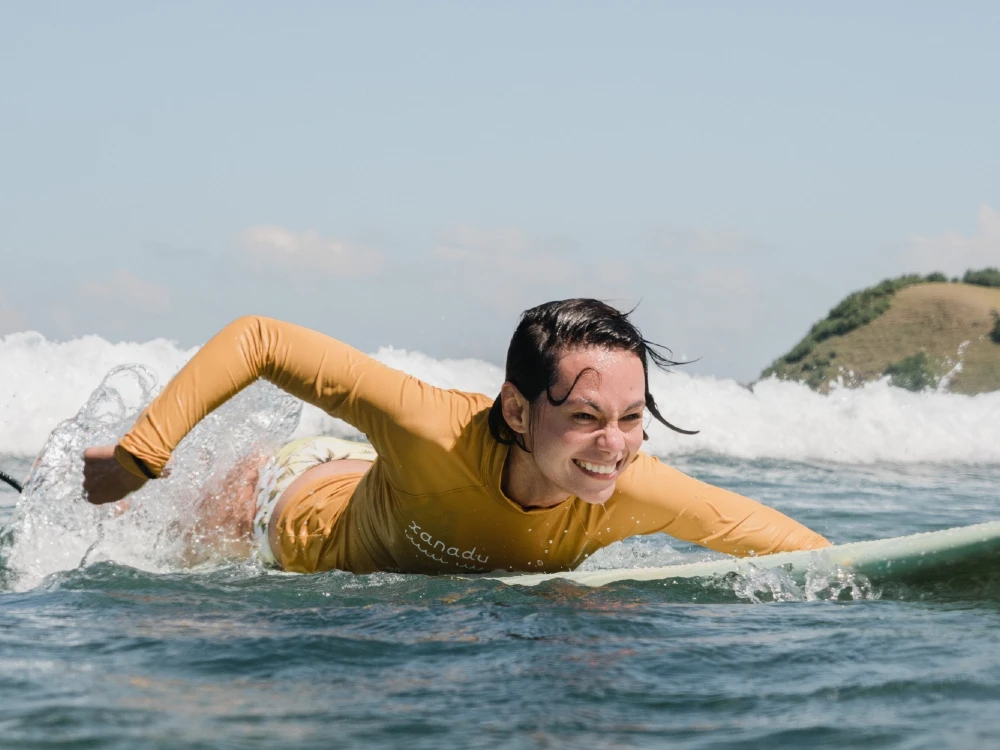
If you’ve never surfed before, booking your first beginner surf camp can feel exciting, but also slightly intimidating.
Will everyone be better than you? Will you spend the whole week wiping out? – Surf lingo gude here
Do you need to be super fit?
The good news is that a quality beginner surf camp program is specifically designed for people exactly like you. For guests who arrive with little to no surfing experience, the entire week is structured around helping you build confidence in the ocean while having fun along the way.
Here’s what you can realistically expect from your first surf camp.
You Don’t Need Any Surfing Experience
One of the biggest misconceptions about surf camps is that you need to know how to surf before you arrive.
You don’t.
A beginner surf camp is designed to teach you everything from the ground up. Coaches will explain ocean safety, surf etiquette, how to carry your board, how to paddle efficiently, how to catch your first wave, and eventually how to stand up.
Many guests arrive never having touched a surfboard before.
That’s completely normal.
You’ll Learn More Than Just Surfing
A good surf camp isn’t simply about spending hours in the water.
Learning happens both in and out of the ocean.
Good beginner surf camps combine practical surf sessions with land-based coaching, which may include:
- Ocean awareness
- Wave selection
- Surf etiquette
- Pop-up technique
- Paddling technique
- Video analysis
- Surf theory workshops
Understanding why something works often helps beginners progress much faster than simply catching wave after wave.
Expect to Fall Off a Lot
Every surfer falls. In fact, falling is part of learning.
During your first few days you will likely spend more time climbing back onto your board than actually standing on it. That’s completely normal and not a sign that you’re doing poorly.
Most beginners are surprised by how quickly they improve once they become comfortable falling and trying again.
The surfers who progress fastest are usually not the most talented – they’re simply the ones willing to laugh at themselves and keep going.
Your Surfboard Will Be Big
You won’t be learning on the shortboards you see in surf movies.
Beginner surf camps typically use large soft-top surfboards because they are:
- More stable
- Easier to paddle
- Easier to catch waves with
- Safer for beginners
While they may not look as exciting, these boards dramatically increase your chances of standing up and enjoying your first surf sessions.
The Ocean Can Feel Overwhelming at First
For many beginners, the ocean is actually the biggest challenge.
Waves move constantly.
Boards drift.
Timing feels confusing.
There are other surfers around.
This is completely normal.
One of the biggest benefits of joining a surf camp rather than learning independently is having experienced coaches guide you through these situations step by step.
Most guests notice a huge jump in confidence after just a few sessions.
You’ll Be More Tired Than Expected
Surfing is a full-body activity.
Even if you’re already active, paddling uses muscles that many people don’t regularly train.
It’s common to experience:
- Sore shoulders
- Tired arms
- Aching back muscles
- Early bedtimes
Some beginner surf camps balance surf sessions with recovery time, allowing your body to adapt throughout the week.
By the end of the retreat, many guests are surprised by how much stronger and more capable they feel.
You’ll Meet Like-Minded People
One of the most unexpected parts of a surf camp is the social experience.
People often arrive alone but leave with new friends from around the world.
Because everyone is learning together, there’s a natural sense of support and encouragement in the group.
You’ll celebrate each other’s first waves, share stories after surf sessions, and often form friendships that continue long after the holiday ends.
Progress Looks Different For Everyone
Some people stand up on their first wave.
Others need a few days.
Both experiences are completely normal.
Your progress will depend on factors such as:
- Previous sports experience
- Fitness level
- Ocean conditions
- Confidence in the water
- Learning style
The goal of your first surf camp shouldn’t be to surf perfectly.
The goal should be to build a solid foundation and develop the skills needed to continue surfing after you return home.
What Does a Typical Day at a Beginner Surf Camp Look Like?
Every surf camp is different, but a typical day might include:
Morning
- Breakfast
- Surf coaching session
- In-water instruction
Midday
- Lunch
- Relaxation and recovery
- Optional activities
Afternoon
- Surf theory workshop
- Video analysis
- Mobility or yoga session
Evening
- Dinner
- Social time with the group
- Early night before the next surf session
This balance helps beginners absorb information without becoming physically overwhelmed.
Is a Beginner Surf Camp Worth It?
For most people, absolutely.
Learning to surf independently can be frustrating because it’s difficult to understand what you’re doing wrong.
A beginner surf camp provides structure, coaching, feedback, suitable equipment, and a supportive environment that can dramatically accelerate learning.
More importantly, it removes much of the uncertainty that beginners often feel when entering the ocean for the first time.
Final Thoughts
Your first beginner surf camp will probably be a mixture of excitement, challenge, laughter, and plenty of wipeouts.
You may not leave surfing like a professional, but you’ll leave with a far better understanding of the ocean, increased confidence in the water, and the foundations needed to continue your surfing journey.
And chances are, after catching that first real wave, you’ll already be thinking about your next surf trip.