Short answer first.
As a beginner, look for a surf camp or retreat in Indonesia with no more than two or three surfers per coach, beginner-friendly waves to surf every day, regular video analysis, softboards to start on and a team that moves you up to harder boards and waves only when you’re ready.
Get those five right and everything else is a given. Well… kinda.
Whether you’ve never even touched a surfboard OR you’ve already had a few lessons, this article will ensure you book the perfect Indo surf camp for your needs.
Let’s go!
Why choosing is harder than it looks
Search surf camps in Indonesia and you’ll find hundreds of options. It’s almost overwhelming!
Bali surf camps alone could fill a phone book (if you remember what that looks like). Every one of them shows the same photo of someone slipping down a turquoise wall. Nearly all of them promise world-class waves and expert coaching. Sigh.
This is exactly the problem when you’re a newbie.
Indonesia is famous for world-class surf breaks. Most of them are reef breaks that suit advanced surfers. Very few are suitable for first-timers and beginners. A camp that sells you the dream of perfect waves might be a lovely place to stay and a terrible place to learn to surf.
We’ve seen it happen heaps.
Someone books a week somewhere gorgeous, spends five days getting absolutely rumbled by the whitewash with a coach who’s shouting from the beach and looking after eight or 12 students. They then fly home convinced surfing isn’t for them. The setup let them down, not the surfing itself. This makes us sad.
So here’s the checklist we’d use if we were booking for a friend.
We run Xanadu Surf & Yoga in Kuta Lombok, so yes, we’re a smidge biased. But these are the questions worth asking any surf camp, resort or retreat, including us.
The beginner checklist for surf camps in Indonesia
Coach to surfer ratio
This matters more than anything else on the list.
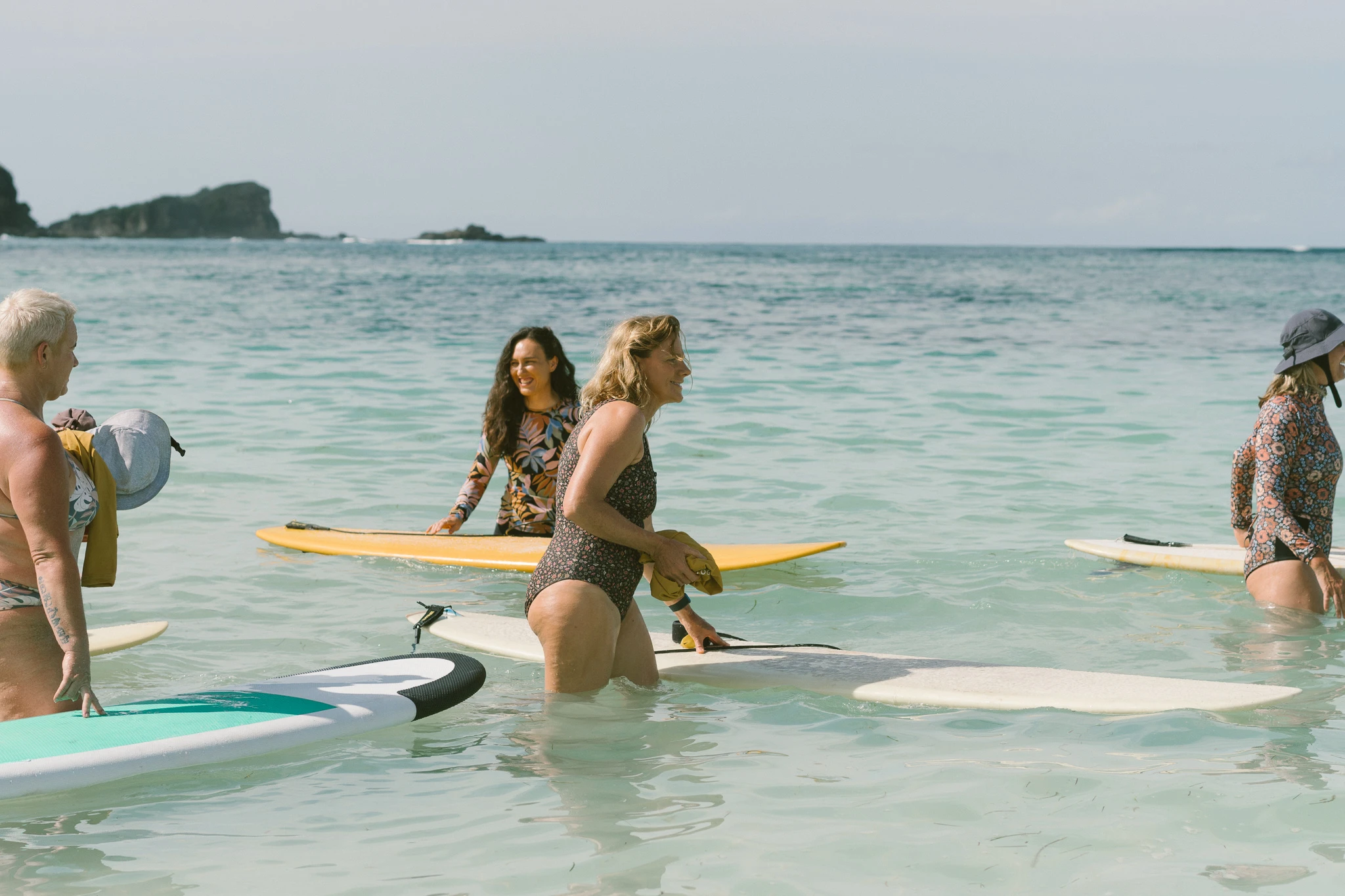
At two surfers per coach, someone is in the water beside you through every surf session, reading the sets, telling you when to paddle and pushing you onto the right wave. At eight per coach you’re mostly on your own with a crowd.
Our tip? Ask the camp for the exact number.
Vague answers like “small groups” can mean almost anything. At Xanadu it’s a maximum of two surfers per ISA-certified coach, which is about as close to private surf lessons as a camp gets.
Beginner-friendly surf spots for your skill level
Ask which surf spots they use for beginners and what the bottom is made of. Sand is great but rare in an archipelago practically surrounded by reef. Reef and rock is OK so long as your coach teaches you how to surf them properly.
The best surf for learning is small, slow and breaking over deep water with a long shoulder you can ride.
A good camp grades you by skill level and picks the beach breaks and mellow reefs that suit your group on that day’s surf conditions.
Our coaches start beginners in deep-ish water on soft boards. We then move each small group to new spots as they progress. We use levels from 1 to 4 on the surf programmes.
You can advance during the week or stay where you are. We’re happy to provide guidance, but the final decision is always with you. Well, kind of – our surf coaches’ main priority is your safety, so we will not take you to surf spots unsuitable for your skill level, even if you ask us to. Sorry!

Video analysis
Here’s the one most beginners skip. Funnily enough… it’s actually the one we fight hardest for.
Surfing is always more about feel. But what feels good when we’re on the wave might not be technically correct. That “feel good” posture or stance might even be holding you back.
Footage doesn’t lie. It will show you bent at the hips like you’re looking for your keys. Seeing it once fixes more than ten verbal corrections.
Ask whether video analysis is included, how many sessions you get and whether you keep the footage. At Xanadu every week includes two video analysis sessions with your coach and the footage is yours to take home.
Board choice
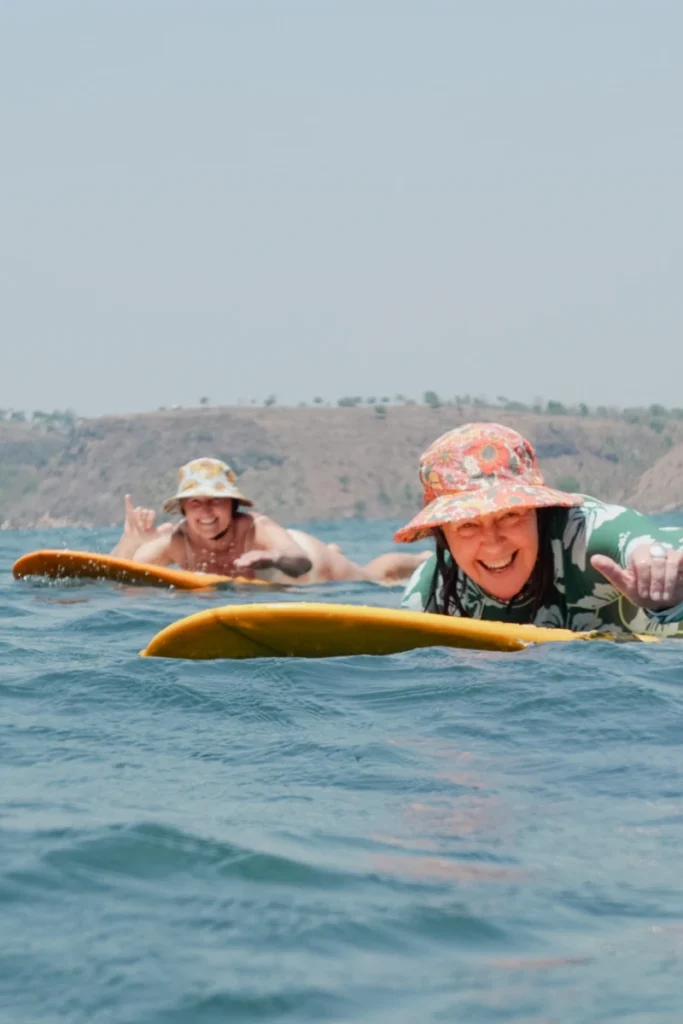
Beginners need volume. A big soft top catches waves easily. It’s also comfortable to lie (and even fall) on.
The red flag is a camp that hands everyone the same board all week. Ask if they’ll swap you to a hard longboard or a smaller board once you’re ready and whether board rental is in the price.
Ours is. Longboards, soft tops and all other board types included.
Coaching beyond the water
The best surf camps teach you to read the ocean as well as ride it.
Look for surf theory, workshops on reading waves and currents and some kind of safety briefing.
This is the stuff that lets you go surfing on your own after the trip. Ours runs surf theory sessions, surf workshops and a pool workshop. And our surf safety tips for beginners cover the basics we drill on day one.
Recovery and yoga
Your shoulders and arms and maybe even ribs will hurt by day two. Pretty much guaranteed.
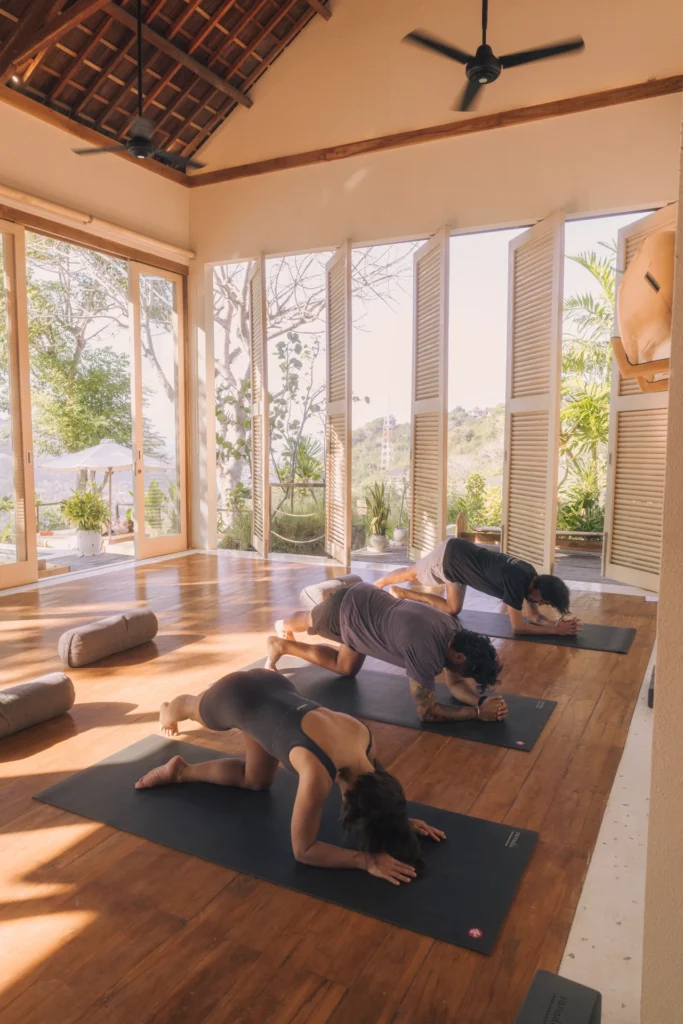
A camp with yoga classes, mobility work and somewhere to recover keeps you paddling through the week instead of tapping out on Wednesday. Our Retreat has an ice bath, infrared sauna and pool on site. And once you’re keen for two surf sessions a day, you can add a free second surf, board and driver included.
Guests at the Village get a midweek sauna and ice bath session at Soma in Kuta Lombok.
What’s in the price
Compare what’s actually included.
Accommodation, food, airport transfers, transport to the surf spots, boards, coaching hours and video analysis all vary a lot between camps.
Ask too about a shared room versus private (since that’s usually the biggest price swing) and which meals are covered. You’ll be hungrier than you expect, so food matters more than it sounds. And check what happens if the waves go flat.
A good camp should have a plan for that unlikely event too.
Surf camp, surf resort or surf retreat?
The names get used loosely across Indonesia, so it helps to know roughly what each one means.
A surf camp is usually focused on coaching, often with simpler accommodation and a social feel. It’s where most people make new friends over dinner. A surf resort leans towards comfort, with a pool, a restaurant and somewhere to relax out of the sun. A surf retreat sits in between, adding yoga, mobility and recovery to daily coaching.
We do both. Xanadu Village is the surf villa / cosy surf camp, a five-minute walk from Kuta’s cafés with a rooftop yoga space and a maximum of 12 guests a week. Xanadu Retreat is the hillside surf retreat above Kuta Bay, with the full recovery setup and a slightly more polished vibe.
The coaching standard is the same at both. Pick based on your budget and how you want to spend the hours you’re not surfing.
Where in Indonesia should a beginner go?
Indonesia has surf all year round, which is part of why Indo surf trips are so popular.
Bali is the obvious first stop. There are dozens of surf camp Bali options and the beach breaks around south Bali and the west coast can work well for learning. The trade-off is crowds. Kuta, Bali in high season can mean sharing a wave with half the world.
The Mentawais and wider Sumatra are bucket list territory for advanced surfers, usually reached by boat. Brilliant, but not for everyone… especially if you’ve never surfed before.
Lombok is the quieter island.
It’s just across the water from Bali but with a fraction of the traffic. There are mellow waves within a short drive of Kuta Lombok. Our About Lombok page has more on why we chose it.
On timing, the dry season brings bigger, more powerful swell. The rainy season, roughly November to April in Lombok, usually means smaller, cleaner waves, lighter winds and quieter lineups.
That’s great news for beginners and we’ve written a full guide to wet season surfing in Lombok.
Red flags when booking a surf camp in Indonesia
A few things that should make you pause:
- No clear ratio: If they can’t tell you how many surfers per coach, assume it’s too much
- No mention of level: Beginners and intermediate surfers sharing one session means someone’s getting shortchanged
- Uncertified surf guides: Ask who trained the coaches. ISA certification is a good baseline
- No safety plan: Ask about first aid and how far it is to proper medical care
- Reviews that only mention the pool: Lovely pool, sure. But did anyone learn to surf there?
FAQ about surf camps in Indonesia
Q. Is Indonesia good for beginner surfers?
Yes, if you choose the camp carefully. Indonesia is best known for reef breaks that suit advanced surfers, but there are plenty of gentle waves in Bali and Lombok. The key is a camp that coaches beginners on those spots specifically.
Q. Which surf camp is best for beginners?
The one with the lowest coach-to-surfer ratio, beginner-friendly waves and video analysis included. At Xanadu in Kuta Lombok, that’s two surfers per coach and two video analysis sessions a week.
Q. How long should I spend at a surf camp in Indonesia?
A week is the minimum we’d suggest. Most total beginners start catching green waves somewhere in that first week. Two weeks lets you lock it in.
Q. How much does a surf trip to Indonesia cost?
It depends on the island and how comfortable you want to be. Always compare what’s included, since coaching hours, food and transfers vary a lot.
Q. Is 40 too old to learn to surf?
Not at all. Plenty of people learn in their 40s and beyond. Good coaching, the right attitude, a big board and some mobility work matter far more than age.
Q. Bali or Lombok for a beginner surf camp?
Both work. Bali has more choice and more crowds. Lombok has quieter lineups and a slower pace, which a lot of beginners find easier to learn in.
Q. What should I pack for a surf camp?
Reef-safe sunscreen, a rash vest, light clothes and less than you think. Our packing list for a surf and yoga retreat has the full rundown.
Find the right surf camp for you
Learning to surf is hard enough without the wrong setup making it harder. Get a small group, the right waves and someone filming you and you’ll be amazed what a week does.
If you’d like to see what that looks like day to day, here’s a typical day at Xanadu. And if Lombok sounds like your kind of place, we’d love to have you.